
Get trending papers in your email inbox once a day!
Get trending papers in your email inbox!
Subscribe



Continuous Subspace Optimization for Continual Learning
Continual learning aims to learn multiple tasks sequentially while preserving prior knowledge, but faces the challenge of catastrophic forgetting when adapting to new tasks. Recently, approaches leveraging pre-trained models have gained increasing popularity in mitigating this issue, due to the strong generalization ability of foundation models. To adjust pre-trained models for new tasks, existing methods usually employ low-rank adaptation, which restricts parameter updates to a fixed low-rank subspace. However, constraining the optimization space inherently compromises the model's learning capacity, resulting in inferior performance. To address this limitation, we propose Continuous Subspace Optimization for Continual Learning (CoSO) to fine-tune the model in a series of subspaces rather than a single one. These sequential subspaces are dynamically determined through the singular value decomposition of the gradients. CoSO updates the model by projecting gradients onto these subspaces, ensuring memory-efficient optimization. To mitigate forgetting, the optimization subspace of each task is constrained to be orthogonal to the historical task subspace. During task learning, CoSO maintains a task-specific component that captures the critical update directions for the current task. Upon completing a task, this component is used to update the historical task subspace, laying the groundwork for subsequent learning. Extensive experiments on multiple datasets demonstrate that CoSO significantly outperforms state-of-the-art methods, especially in challenging scenarios with long task sequences.
DAGs with NO TEARS: Continuous Optimization for Structure Learning
Estimating the structure of directed acyclic graphs (DAGs, also known as Bayesian networks) is a challenging problem since the search space of DAGs is combinatorial and scales superexponentially with the number of nodes. Existing approaches rely on various local heuristics for enforcing the acyclicity constraint. In this paper, we introduce a fundamentally different strategy: We formulate the structure learning problem as a purely continuous optimization problem over real matrices that avoids this combinatorial constraint entirely. This is achieved by a novel characterization of acyclicity that is not only smooth but also exact. The resulting problem can be efficiently solved by standard numerical algorithms, which also makes implementation effortless. The proposed method outperforms existing ones, without imposing any structural assumptions on the graph such as bounded treewidth or in-degree. Code implementing the proposed algorithm is open-source and publicly available at https://github.com/xunzheng/notears.
Gradient-Based Program Repair: Fixing Bugs in Continuous Program Spaces
Automatic program repair seeks to generate correct code from buggy programs, with most approaches searching the correct program in a discrete, symbolic space of source code tokens. This symbolic search is fundamentally limited by its inability to directly reason about program behavior. We introduce Gradient-Based Program Repair (GBPR), a new paradigm that reframes program repair as continuous optimization in a differentiable numerical program space. Our core insight is to compile symbolic programs into differentiable numerical representations, enabling search in the numerical program space directly guided by program behavior. To evaluate GBPR, we present RaspBugs, a new benchmark of 1,466 buggy symbolic RASP programs and their respective numerical representations. Our experiments demonstrate that GBPR can effectively repair buggy symbolic programs by gradient-based optimization in the numerical program space, with convincing repair trajectories. To our knowledge, we are the first to state program repair as continuous optimization in a numerical program space. Our work establishes a new direction for program repair research, bridging two rich worlds: continuous optimization and program behavior.
CoLiDE: Concomitant Linear DAG Estimation
We deal with the combinatorial problem of learning directed acyclic graph (DAG) structure from observational data adhering to a linear structural equation model (SEM). Leveraging advances in differentiable, nonconvex characterizations of acyclicity, recent efforts have advocated a continuous constrained optimization paradigm to efficiently explore the space of DAGs. Most existing methods employ lasso-type score functions to guide this search, which (i) require expensive penalty parameter retuning when the unknown SEM noise variances change across problem instances; and (ii) implicitly rely on limiting homoscedasticity assumptions. In this work, we propose a new convex score function for sparsity-aware learning of linear DAGs, which incorporates concomitant estimation of scale and thus effectively decouples the sparsity parameter from the exogenous noise levels. Regularization via a smooth, nonconvex acyclicity penalty term yields CoLiDE (Concomitant Linear DAG Estimation), a regression-based criterion amenable to efficient gradient computation and closed-form estimation of noise variances in heteroscedastic scenarios. Our algorithm outperforms state-of-the-art methods without incurring added complexity, especially when the DAGs are larger and the noise level profile is heterogeneous. We also find CoLiDE exhibits enhanced stability manifested via reduced standard deviations in several domain-specific metrics, underscoring the robustness of our novel linear DAG estimator.
Simultaneous q-Space Sampling Optimization and Reconstruction for Fast and High-fidelity Diffusion Magnetic Resonance Imaging
Diffusion Magnetic Resonance Imaging (dMRI) plays a crucial role in the noninvasive investigation of tissue microstructural properties and structural connectivity in the in vivo human brain. However, to effectively capture the intricate characteristics of water diffusion at various directions and scales, it is important to employ comprehensive q-space sampling. Unfortunately, this requirement leads to long scan times, limiting the clinical applicability of dMRI. To address this challenge, we propose SSOR, a Simultaneous q-Space sampling Optimization and Reconstruction framework. We jointly optimize a subset of q-space samples using a continuous representation of spherical harmonic functions and a reconstruction network. Additionally, we integrate the unique properties of diffusion magnetic resonance imaging (dMRI) in both the q-space and image domains by applying l1-norm and total-variation regularization. The experiments conducted on HCP data demonstrate that SSOR has promising strengths both quantitatively and qualitatively and exhibits robustness to noise.
Inference-time Alignment in Continuous Space
Aligning large language models with human feedback at inference time has received increasing attention due to its flexibility. Existing methods rely on generating multiple responses from the base policy for search using a reward model, which can be considered as searching in a discrete response space. However, these methods struggle to explore informative candidates when the base policy is weak or the candidate set is small, resulting in limited effectiveness. In this paper, to address this problem, we propose Simple Energy Adaptation (SEA), a simple yet effective algorithm for inference-time alignment. In contrast to expensive search over the discrete space, SEA directly adapts original responses from the base policy toward the optimal one via gradient-based sampling in continuous latent space. Specifically, SEA formulates inference as an iterative optimization procedure on an energy function over actions in the continuous space defined by the optimal policy, enabling simple and effective alignment. For instance, despite its simplicity, SEA outperforms the second-best baseline with a relative improvement of up to 77.51% on AdvBench and 16.36% on MATH. Our code is publicly available at https://github.com/yuanyige/sea

Combinatorial Optimization with Policy Adaptation using Latent Space Search
Combinatorial Optimization underpins many real-world applications and yet, designing performant algorithms to solve these complex, typically NP-hard, problems remains a significant research challenge. Reinforcement Learning (RL) provides a versatile framework for designing heuristics across a broad spectrum of problem domains. However, despite notable progress, RL has not yet supplanted industrial solvers as the go-to solution. Current approaches emphasize pre-training heuristics that construct solutions but often rely on search procedures with limited variance, such as stochastically sampling numerous solutions from a single policy or employing computationally expensive fine-tuning of the policy on individual problem instances. Building on the intuition that performant search at inference time should be anticipated during pre-training, we propose COMPASS, a novel RL approach that parameterizes a distribution of diverse and specialized policies conditioned on a continuous latent space. We evaluate COMPASS across three canonical problems - Travelling Salesman, Capacitated Vehicle Routing, and Job-Shop Scheduling - and demonstrate that our search strategy (i) outperforms state-of-the-art approaches on 11 standard benchmarking tasks and (ii) generalizes better, surpassing all other approaches on a set of 18 procedurally transformed instance distributions.





OptiProxy-NAS: Optimization Proxy based End-to-End Neural Architecture Search
Neural architecture search (NAS) is a hard computationally expensive optimization problem with a discrete, vast, and spiky search space. One of the key research efforts dedicated to this space focuses on accelerating NAS via certain proxy evaluations of neural architectures. Different from the prevalent predictor-based methods using surrogate models and differentiable architecture search via supernetworks, we propose an optimization proxy to streamline the NAS as an end-to-end optimization framework, named OptiProxy-NAS. In particular, using a proxy representation, the NAS space is reformulated to be continuous, differentiable, and smooth. Thereby, any differentiable optimization method can be applied to the gradient-based search of the relaxed architecture parameters. Our comprehensive experiments on 12 NAS tasks of 4 search spaces across three different domains including computer vision, natural language processing, and resource-constrained NAS fully demonstrate the superior search results and efficiency. Further experiments on low-fidelity scenarios verify the flexibility.

LARGO: Latent Adversarial Reflection through Gradient Optimization for Jailbreaking LLMs
Efficient red-teaming method to uncover vulnerabilities in Large Language Models (LLMs) is crucial. While recent attacks often use LLMs as optimizers, the discrete language space make gradient-based methods struggle. We introduce LARGO (Latent Adversarial Reflection through Gradient Optimization), a novel latent self-reflection attack that reasserts the power of gradient-based optimization for generating fluent jailbreaking prompts. By operating within the LLM's continuous latent space, LARGO first optimizes an adversarial latent vector and then recursively call the same LLM to decode the latent into natural language. This methodology yields a fast, effective, and transferable attack that produces fluent and stealthy prompts. On standard benchmarks like AdvBench and JailbreakBench, LARGO surpasses leading jailbreaking techniques, including AutoDAN, by 44 points in attack success rate. Our findings demonstrate a potent alternative to agentic LLM prompting, highlighting the efficacy of interpreting and attacking LLM internals through gradient optimization.

Gradient-Based Optimization of Core-Shell Particles with Discrete Materials for Directional Scattering
Designing nanophotonic structures traditionally grapples with the complexities of discrete parameters, such as real materials, often resorting to costly global optimization methods. This paper introduces an approach that leverages generative deep learning to map discrete parameter sets into a continuous latent space, enabling direct gradient-based optimization. For scenarios with non-differentiable physics evaluation functions, a neural network is employed as a differentiable surrogate model. The efficacy of this methodology is demonstrated by optimizing the directional scattering properties of core-shell nanoparticles composed of a selection of realistic materials. We derive suggestions for core-shell geometries with strong forward scattering and minimized backscattering. Our findings reveal significant improvements in computational efficiency and performance when compared to global optimization techniques. Beyond nanophotonics design problems, this framework holds promise for broad applications across all types of inverse problems constrained by discrete variables.
Empower Structure-Based Molecule Optimization with Gradient Guided Bayesian Flow Networks
Structure-Based molecule optimization (SBMO) aims to optimize molecules with both continuous coordinates and discrete types against protein targets. A promising direction is to exert gradient guidance on generative models given its remarkable success in images, but it is challenging to guide discrete data and risks inconsistencies between modalities. To this end, we leverage a continuous and differentiable space derived through Bayesian inference, presenting Molecule Joint Optimization (MolJO), the gradient-based SBMO framework that facilitates joint guidance signals across different modalities while preserving SE(3)-equivariance. We introduce a novel backward correction strategy that optimizes within a sliding window of the past histories, allowing for a seamless trade-off between explore-and-exploit during optimization. MolJO achieves state-of-the-art performance on CrossDocked2020 benchmark (Success Rate 51.3%, Vina Dock -9.05 and SA 0.78), more than 4x improvement in Success Rate compared to the gradient-based counterpart, and 2x "Me-Better" Ratio as much as 3D baselines. Furthermore, we extend MolJO to a wide range of optimization settings, including multi-objective optimization and challenging tasks in drug design such as R-group optimization and scaffold hopping, further underscoring its versatility. Code is available at https://github.com/AlgoMole/MolCRAFT.

CoT-Space: A Theoretical Framework for Internal Slow-Thinking via Reinforcement Learning
Reinforcement Learning (RL) has become a pivotal approach for enhancing the reasoning capabilities of Large Language Models (LLMs). However, a significant theoretical gap persists, as traditional token-level RL frameworks fail to align with the reasoning-level nature of complex, multi-step thought processes like Chain-of-Thought (CoT). To address this challenge, we introduce CoT-Space, a novel theoretical framework that recasts LLM reasoning from a discrete token-prediction task to an optimization process within a continuous, reasoning-level semantic space. By analyzing this process from both a noise perspective and a risk perspective, we demonstrate that the convergence to an optimal CoT length is a natural consequence of the fundamental trade-off between underfitting and overfitting. Furthermore, extensive experiments provide strong empirical validation for our theoretical findings. Our framework not only provides a coherent explanation for empirical phenomena such as overthinking but also offers a solid theoretical foundation to guide the future development of more effective and generalizable reasoning agents.
CAMEL: Continuous Action Masking Enabled by Large Language Models for Reinforcement Learning
Reinforcement learning (RL) in continuous action spaces encounters persistent challenges, such as inefficient exploration and convergence to suboptimal solutions. To address these limitations, we propose CAMEL, a novel framework integrating LLM-generated suboptimal policies into the RL training pipeline. CAMEL leverages dynamic action masking and an adaptive epsilon-masking mechanism to guide exploration during early training stages while gradually enabling agents to optimize policies independently. At the core of CAMEL lies the integration of Python-executable suboptimal policies generated by LLMs based on environment descriptions and task objectives. Although simplistic and hard-coded, these policies offer valuable initial guidance for RL agents. To effectively utilize these priors, CAMEL employs masking-aware optimization to dynamically constrain the action space based on LLM outputs. Additionally, epsilon-masking gradually reduces reliance on LLM-generated guidance, enabling agents to transition from constrained exploration to autonomous policy refinement. Experimental validation on Gymnasium MuJoCo environments demonstrates the effectiveness of CAMEL. In Hopper-v4 and Ant-v4, LLM-generated policies significantly improve sample efficiency, achieving performance comparable to or surpassing expert masking baselines. For Walker2d-v4, where LLMs struggle to accurately model bipedal gait dynamics, CAMEL maintains robust RL performance without notable degradation, highlighting the framework's adaptability across diverse tasks. While CAMEL shows promise in enhancing sample efficiency and mitigating convergence challenges, these issues remain open for further research. Future work aims to generalize CAMEL to multimodal LLMs for broader observation-action spaces and automate policy evaluation, reducing human intervention and enhancing scalability in RL training pipelines.

Reparameterized Policy Learning for Multimodal Trajectory Optimization
We investigate the challenge of parametrizing policies for reinforcement learning (RL) in high-dimensional continuous action spaces. Our objective is to develop a multimodal policy that overcomes limitations inherent in the commonly-used Gaussian parameterization. To achieve this, we propose a principled framework that models the continuous RL policy as a generative model of optimal trajectories. By conditioning the policy on a latent variable, we derive a novel variational bound as the optimization objective, which promotes exploration of the environment. We then present a practical model-based RL method, called Reparameterized Policy Gradient (RPG), which leverages the multimodal policy parameterization and learned world model to achieve strong exploration capabilities and high data efficiency. Empirical results demonstrate that our method can help agents evade local optima in tasks with dense rewards and solve challenging sparse-reward environments by incorporating an object-centric intrinsic reward. Our method consistently outperforms previous approaches across a range of tasks. Code and supplementary materials are available on the project page https://haosulab.github.io/RPG/



TOMATOES: Topology and Material Optimization for Latent Heat Thermal Energy Storage Devices
Latent heat thermal energy storage (LHTES) systems are compelling candidates for energy storage, primarily owing to their high storage density. Improving their performance is crucial for developing the next-generation efficient and cost effective devices. Topology optimization (TO) has emerged as a powerful computational tool to design LHTES systems by optimally distributing a high-conductivity material (HCM) and a phase change material (PCM). However, conventional TO typically limits to optimizing the geometry for a fixed, pre-selected materials. This approach does not leverage the large and expanding databases of novel materials. Consequently, the co-design of material and geometry for LHTES remains a challenge and unexplored. To address this limitation, we present an automated design framework for the concurrent optimization of material choice and topology. A key challenge is the discrete nature of material selection, which is incompatible with the gradient-based methods used for TO. We overcome this by using a data-driven variational autoencoder (VAE) to project discrete material databases for both the HCM and PCM onto continuous and differentiable latent spaces. These continuous material representations are integrated into an end-to-end differentiable, transient nonlinear finite-element solver that accounts for phase change. We demonstrate this framework on a problem aimed at maximizing the discharged energy within a specified time, subject to cost constraints. The effectiveness of the proposed method is validated through several illustrative examples.
Decentralized Policy Optimization
The study of decentralized learning or independent learning in cooperative multi-agent reinforcement learning has a history of decades. Recently empirical studies show that independent PPO (IPPO) can obtain good performance, close to or even better than the methods of centralized training with decentralized execution, in several benchmarks. However, decentralized actor-critic with convergence guarantee is still open. In this paper, we propose decentralized policy optimization (DPO), a decentralized actor-critic algorithm with monotonic improvement and convergence guarantee. We derive a novel decentralized surrogate for policy optimization such that the monotonic improvement of joint policy can be guaranteed by each agent independently optimizing the surrogate. In practice, this decentralized surrogate can be realized by two adaptive coefficients for policy optimization at each agent. Empirically, we compare DPO with IPPO in a variety of cooperative multi-agent tasks, covering discrete and continuous action spaces, and fully and partially observable environments. The results show DPO outperforms IPPO in most tasks, which can be the evidence for our theoretical results.
Stein Latent Optimization for Generative Adversarial Networks
Generative adversarial networks (GANs) with clustered latent spaces can perform conditional generation in a completely unsupervised manner. In the real world, the salient attributes of unlabeled data can be imbalanced. However, most of existing unsupervised conditional GANs cannot cluster attributes of these data in their latent spaces properly because they assume uniform distributions of the attributes. To address this problem, we theoretically derive Stein latent optimization that provides reparameterizable gradient estimations of the latent distribution parameters assuming a Gaussian mixture prior in a continuous latent space. Structurally, we introduce an encoder network and novel unsupervised conditional contrastive loss to ensure that data generated from a single mixture component represent a single attribute. We confirm that the proposed method, named Stein Latent Optimization for GANs (SLOGAN), successfully learns balanced or imbalanced attributes and achieves state-of-the-art unsupervised conditional generation performance even in the absence of attribute information (e.g., the imbalance ratio). Moreover, we demonstrate that the attributes to be learned can be manipulated using a small amount of probe data.

TD-MPC2: Scalable, Robust World Models for Continuous Control
TD-MPC is a model-based reinforcement learning (RL) algorithm that performs local trajectory optimization in the latent space of a learned implicit (decoder-free) world model. In this work, we present TD-MPC2: a series of improvements upon the TD-MPC algorithm. We demonstrate that TD-MPC2 improves significantly over baselines across 104 online RL tasks spanning 4 diverse task domains, achieving consistently strong results with a single set of hyperparameters. We further show that agent capabilities increase with model and data size, and successfully train a single 317M parameter agent to perform 80 tasks across multiple task domains, embodiments, and action spaces. We conclude with an account of lessons, opportunities, and risks associated with large TD-MPC2 agents. Explore videos, models, data, code, and more at https://nicklashansen.github.io/td-mpc2

Robust Model-Based Optimization for Challenging Fitness Landscapes
Protein design, a grand challenge of the day, involves optimization on a fitness landscape, and leading methods adopt a model-based approach where a model is trained on a training set (protein sequences and fitness) and proposes candidates to explore next. These methods are challenged by sparsity of high-fitness samples in the training set, a problem that has been in the literature. A less recognized but equally important problem stems from the distribution of training samples in the design space: leading methods are not designed for scenarios where the desired optimum is in a region that is not only poorly represented in training data, but also relatively far from the highly represented low-fitness regions. We show that this problem of "separation" in the design space is a significant bottleneck in existing model-based optimization tools and propose a new approach that uses a novel VAE as its search model to overcome the problem. We demonstrate its advantage over prior methods in robustly finding improved samples, regardless of the imbalance and separation between low- and high-fitness training samples. Our comprehensive benchmark on real and semi-synthetic protein datasets as well as solution design for physics-informed neural networks, showcases the generality of our approach in discrete and continuous design spaces. Our implementation is available at https://github.com/sabagh1994/PGVAE.
On the saddle point problem for non-convex optimization
A central challenge to many fields of science and engineering involves minimizing non-convex error functions over continuous, high dimensional spaces. Gradient descent or quasi-Newton methods are almost ubiquitously used to perform such minimizations, and it is often thought that a main source of difficulty for the ability of these local methods to find the global minimum is the proliferation of local minima with much higher error than the global minimum. Here we argue, based on results from statistical physics, random matrix theory, and neural network theory, that a deeper and more profound difficulty originates from the proliferation of saddle points, not local minima, especially in high dimensional problems of practical interest. Such saddle points are surrounded by high error plateaus that can dramatically slow down learning, and give the illusory impression of the existence of a local minimum. Motivated by these arguments, we propose a new algorithm, the saddle-free Newton method, that can rapidly escape high dimensional saddle points, unlike gradient descent and quasi-Newton methods. We apply this algorithm to deep neural network training, and provide preliminary numerical evidence for its superior performance.
CLaRa: Bridging Retrieval and Generation with Continuous Latent Reasoning
Retrieval-augmented generation (RAG) enhances large language models (LLMs) with external knowledge but still suffers from long contexts and disjoint retrieval-generation optimization. In this work, we propose CLaRa (Continuous Latent Reasoning), a unified framework that performs embedding-based compression and joint optimization in a shared continuous space. To obtain semantically rich and retrievable compressed vectors, we introduce SCP, a key-preserving data synthesis framework using QA and paraphrase supervision. CLaRa then trains the reranker and generator end-to-end via a single language modeling loss, with gradients flowing through both modules using a differentiable top-k estimator. Theoretically, this unified optimization aligns retrieval relevance with answer quality. Experiments across multiple QA benchmarks show that CLaRa achieves state-of-the-art compression and reranking performance, often surpassing text-based fine-tuned baselines.

ScoreFlow: Mastering LLM Agent Workflows via Score-based Preference Optimization
Recent research has leveraged large language model multi-agent systems for complex problem-solving while trying to reduce the manual effort required to build them, driving the development of automated agent workflow optimization methods. However, existing methods remain inflexible due to representational limitations, a lack of adaptability, and poor scalability when relying on discrete optimization techniques. We address these challenges with ScoreFlow, a simple yet high-performance framework that leverages efficient gradient-based optimization in a continuous space. ScoreFlow incorporates Score-DPO, a novel variant of the direct preference optimization method that accounts for quantitative feedback. Across six benchmarks spanning question answering, coding, and mathematical reasoning, ScoreFlow achieves an 8.2% improvement over existing baselines. Moreover, it empowers smaller models to outperform larger ones with lower inference costs. Project: https://github.com/Gen-Verse/ScoreFlow




PepTune: De Novo Generation of Therapeutic Peptides with Multi-Objective-Guided Discrete Diffusion
Peptide therapeutics, a major class of medicines, have achieved remarkable success across diseases such as diabetes and cancer, with landmark examples such as GLP-1 receptor agonists revolutionizing the treatment of type-2 diabetes and obesity. Despite their success, designing peptides that satisfy multiple conflicting objectives, such as target binding affinity, solubility, and membrane permeability, remains a major challenge. Classical drug development and structure-based design are ineffective for such tasks, as they fail to optimize global functional properties critical for therapeutic efficacy. Existing generative frameworks are largely limited to continuous spaces, unconditioned outputs, or single-objective guidance, making them unsuitable for discrete sequence optimization across multiple properties. To address this, we present PepTune, a multi-objective discrete diffusion model for the simultaneous generation and optimization of therapeutic peptide SMILES. Built on the Masked Discrete Language Model (MDLM) framework, PepTune ensures valid peptide structures with state-dependent masking schedules and penalty-based objectives. To guide the diffusion process, we propose a Monte Carlo Tree Search (MCTS)-based strategy that balances exploration and exploitation to iteratively refine Pareto-optimal sequences. MCTS integrates classifier-based rewards with search-tree expansion, overcoming gradient estimation challenges and data sparsity inherent to discrete spaces. Using PepTune, we generate diverse, chemically-modified peptides optimized for multiple therapeutic properties, including target binding affinity, membrane permeability, solubility, hemolysis, and non-fouling characteristics on various disease-relevant targets. In total, our results demonstrate that MCTS-guided discrete diffusion is a powerful and modular approach for multi-objective sequence design in discrete state spaces.


Spectral Architecture Search for Neural Networks
Architecture design and optimization are challenging problems in the field of artificial neural networks. Working in this context, we here present SPARCS (SPectral ARchiteCture Search), a novel architecture search protocol which exploits the spectral attributes of the inter-layer transfer matrices. SPARCS allows one to explore the space of possible architectures by spanning continuous and differentiable manifolds, thus enabling for gradient-based optimization algorithms to be eventually employed. With reference to simple benchmark models, we show that the newly proposed method yields a self-emerging architecture with a minimal degree of expressivity to handle the task under investigation and with a reduced parameter count as compared to other viable alternatives.

3D Gaussian Splatting for Real-Time Radiance Field Rendering
Radiance Field methods have recently revolutionized novel-view synthesis of scenes captured with multiple photos or videos. However, achieving high visual quality still requires neural networks that are costly to train and render, while recent faster methods inevitably trade off speed for quality. For unbounded and complete scenes (rather than isolated objects) and 1080p resolution rendering, no current method can achieve real-time display rates. We introduce three key elements that allow us to achieve state-of-the-art visual quality while maintaining competitive training times and importantly allow high-quality real-time (>= 30 fps) novel-view synthesis at 1080p resolution. First, starting from sparse points produced during camera calibration, we represent the scene with 3D Gaussians that preserve desirable properties of continuous volumetric radiance fields for scene optimization while avoiding unnecessary computation in empty space; Second, we perform interleaved optimization/density control of the 3D Gaussians, notably optimizing anisotropic covariance to achieve an accurate representation of the scene; Third, we develop a fast visibility-aware rendering algorithm that supports anisotropic splatting and both accelerates training and allows realtime rendering. We demonstrate state-of-the-art visual quality and real-time rendering on several established datasets.


PromptBoosting: Black-Box Text Classification with Ten Forward Passes
We describe PromptBoosting, a query-efficient procedure for building a text classifier from a neural language model (LM) without access to the LM's parameters, gradients, or hidden representations. This form of "black-box" classifier training has become increasingly important as the cost of training and inference in large-scale LMs grows. But existing black-box LM classifier learning approaches are themselves computationally inefficient, typically specializing LMs to the target task by searching in a large space of (discrete or continuous) prompts using zeroth-order optimization methods. Instead of directly optimizing in prompt space, PromptBoosting obtains a small pool of prompts via a gradient-free approach and then constructs a large pool of weak learners by pairing these prompts with different elements of the LM's output distribution. These weak learners are then ensembled using the AdaBoost algorithm. The entire learning process requires only a small number of forward passes and no backward pass. Experiments show that PromptBoosting achieves state-of-the-art performance in multiple black-box few-shot classification tasks, and matches or outperforms full fine-tuning in both few-shot and standard learning paradigms, while training 10x faster than existing black-box methods.
Differentiable Neural Input Search for Recommender Systems
Latent factor models are the driving forces of the state-of-the-art recommender systems, with an important insight of vectorizing raw input features into dense embeddings. The dimensions of different feature embeddings are often set to a same value empirically, which limits the predictive performance of latent factor models. Existing works have proposed heuristic or reinforcement learning-based methods to search for mixed feature embedding dimensions. For efficiency concern, these methods typically choose embedding dimensions from a restricted set of candidate dimensions. However, this restriction will hurt the flexibility of dimension selection, leading to suboptimal performance of search results. In this paper, we propose Differentiable Neural Input Search (DNIS), a method that searches for mixed feature embedding dimensions in a more flexible space through continuous relaxation and differentiable optimization. The key idea is to introduce a soft selection layer that controls the significance of each embedding dimension, and optimize this layer according to model's validation performance. DNIS is model-agnostic and thus can be seamlessly incorporated with existing latent factor models for recommendation. We conduct experiments with various architectures of latent factor models on three public real-world datasets for rating prediction, Click-Through-Rate (CTR) prediction, and top-k item recommendation. The results demonstrate that our method achieves the best predictive performance compared with existing neural input search approaches with fewer embedding parameters and less time cost.
A Tutorial on Bayesian Optimization
Bayesian optimization is an approach to optimizing objective functions that take a long time (minutes or hours) to evaluate. It is best-suited for optimization over continuous domains of less than 20 dimensions, and tolerates stochastic noise in function evaluations. It builds a surrogate for the objective and quantifies the uncertainty in that surrogate using a Bayesian machine learning technique, Gaussian process regression, and then uses an acquisition function defined from this surrogate to decide where to sample. In this tutorial, we describe how Bayesian optimization works, including Gaussian process regression and three common acquisition functions: expected improvement, entropy search, and knowledge gradient. We then discuss more advanced techniques, including running multiple function evaluations in parallel, multi-fidelity and multi-information source optimization, expensive-to-evaluate constraints, random environmental conditions, multi-task Bayesian optimization, and the inclusion of derivative information. We conclude with a discussion of Bayesian optimization software and future research directions in the field. Within our tutorial material we provide a generalization of expected improvement to noisy evaluations, beyond the noise-free setting where it is more commonly applied. This generalization is justified by a formal decision-theoretic argument, standing in contrast to previous ad hoc modifications.
Tunable Trajectory Planner Using G3 Curves
Trajectory planning is commonly used as part of a local planner in autonomous driving. This paper considers the problem of planning a continuous-curvature-rate trajectory between fixed start and goal states that minimizes a tunable trade-off between passenger comfort and travel time. The problem is an instance of infinite dimensional optimization over two continuous functions: a path, and a velocity profile. We propose a simplification of this problem that facilitates the discretization of both functions. This paper also proposes a method to quickly generate minimal-length paths between start and goal states based on a single tuning parameter: the second derivative of curvature. Furthermore, we discretize the set of velocity profiles along a given path into a selection of acceleration way-points along the path. Gradient-descent is then employed to minimize cost over feasible choices of the second derivative of curvature, and acceleration way-points, resulting in a method that repeatedly solves the path and velocity profiles in an iterative fashion. Numerical examples are provided to illustrate the benefits of the proposed methods.

Pre-trained knowledge elevates large language models beyond traditional chemical reaction optimizers
Modern optimization in experimental chemistry employs algorithmic search through black-box parameter spaces. Here we demonstrate that pre-trained knowledge in large language models (LLMs) fundamentally changes this paradigm. Using six fully enumerated categorical reaction datasets (768 - 5,684 experiments), we benchmark LLM-guided optimization (LLM-GO) against Bayesian optimization (BO) and random sampling. Frontier LLMs consistently match or exceed BO performance across five single-objective datasets, with advantages growing as parameter complexity increases and high-performing conditions become scarce (<5% of space). BO retains superiority only for explicit multi-objective trade-offs. To understand these contrasting behaviors, we introduce a topology-agnostic information theory framework quantifying sampling diversity throughout optimization campaigns. This analysis reveals that LLMs maintain systematically higher exploration entropy than BO across all datasets while achieving superior performance, with advantages most pronounced in solution-scarce parameter spaces where high-entropy exploration typically fails - suggesting that pre-trained domain knowledge enables more effective navigation of chemical parameter space rather than replacing structured exploration strategies. To enable transparent benchmarking and community validation, we release Iron Mind (https://gomes.andrew.cmu.edu/iron-mind), a no-code platform for side-by-side evaluation of human, algorithmic, and LLM optimization campaigns with public leaderboards and complete trajectories. Our findings establish that LLM-GO excels precisely where traditional methods struggle: complex categorical spaces requiring domain understanding rather than mathematical optimization.
Identifying Policy Gradient Subspaces
Policy gradient methods hold great potential for solving complex continuous control tasks. Still, their training efficiency can be improved by exploiting structure within the optimization problem. Recent work indicates that supervised learning can be accelerated by leveraging the fact that gradients lie in a low-dimensional and slowly-changing subspace. In this paper, we conduct a thorough evaluation of this phenomenon for two popular deep policy gradient methods on various simulated benchmark tasks. Our results demonstrate the existence of such gradient subspaces despite the continuously changing data distribution inherent to reinforcement learning. These findings reveal promising directions for future work on more efficient reinforcement learning, e.g., through improving parameter-space exploration or enabling second-order optimization.

Constrained Efficient Global Optimization of Expensive Black-box Functions
We study the problem of constrained efficient global optimization, where both the objective and constraints are expensive black-box functions that can be learned with Gaussian processes. We propose CONFIG (CONstrained efFIcient Global Optimization), a simple and effective algorithm to solve it. Under certain regularity assumptions, we show that our algorithm enjoys the same cumulative regret bound as that in the unconstrained case and similar cumulative constraint violation upper bounds. For commonly used Matern and Squared Exponential kernels, our bounds are sublinear and allow us to derive a convergence rate to the optimal solution of the original constrained problem. In addition, our method naturally provides a scheme to declare infeasibility when the original black-box optimization problem is infeasible. Numerical experiments on sampled instances from the Gaussian process, artificial numerical problems, and a black-box building controller tuning problem all demonstrate the competitive performance of our algorithm. Compared to the other state-of-the-art methods, our algorithm significantly improves the theoretical guarantees, while achieving competitive empirical performance.
Symbol: Generating Flexible Black-Box Optimizers through Symbolic Equation Learning
Recent Meta-learning for Black-Box Optimization (MetaBBO) methods harness neural networks to meta-learn configurations of traditional black-box optimizers. Despite their success, they are inevitably restricted by the limitations of predefined hand-crafted optimizers. In this paper, we present Symbol, a novel framework that promotes the automated discovery of black-box optimizers through symbolic equation learning. Specifically, we propose a Symbolic Equation Generator (SEG) that allows closed-form optimization rules to be dynamically generated for specific tasks and optimization steps. Within Symbol, we then develop three distinct strategies based on reinforcement learning, so as to meta-learn the SEG efficiently. Extensive experiments reveal that the optimizers generated by Symbol not only surpass the state-of-the-art BBO and MetaBBO baselines, but also exhibit exceptional zero-shot generalization abilities across entirely unseen tasks with different problem dimensions, population sizes, and optimization horizons. Furthermore, we conduct in-depth analyses of our Symbol framework and the optimization rules that it generates, underscoring its desirable flexibility and interpretability.

Learning invariant representations of time-homogeneous stochastic dynamical systems
We consider the general class of time-homogeneous stochastic dynamical systems, both discrete and continuous, and study the problem of learning a representation of the state that faithfully captures its dynamics. This is instrumental to learning the transfer operator or the generator of the system, which in turn can be used for numerous tasks, such as forecasting and interpreting the system dynamics. We show that the search for a good representation can be cast as an optimization problem over neural networks. Our approach is supported by recent results in statistical learning theory, highlighting the role of approximation error and metric distortion in the learning problem. The objective function we propose is associated with projection operators from the representation space to the data space, overcomes metric distortion, and can be empirically estimated from data. In the discrete-time setting, we further derive a relaxed objective function that is differentiable and numerically well-conditioned. We compare our method against state-of-the-art approaches on different datasets, showing better performance across the board.
Metrics for Markov Decision Processes with Infinite State Spaces
We present metrics for measuring state similarity in Markov decision processes (MDPs) with infinitely many states, including MDPs with continuous state spaces. Such metrics provide a stable quantitative analogue of the notion of bisimulation for MDPs, and are suitable for use in MDP approximation. We show that the optimal value function associated with a discounted infinite horizon planning task varies continuously with respect to our metric distances.
Global Optimization with Parametric Function Approximation
We consider the problem of global optimization with noisy zeroth order oracles - a well-motivated problem useful for various applications ranging from hyper-parameter tuning for deep learning to new material design. Existing work relies on Gaussian processes or other non-parametric family, which suffers from the curse of dimensionality. In this paper, we propose a new algorithm GO-UCB that leverages a parametric family of functions (e.g., neural networks) instead. Under a realizable assumption and a few other mild geometric conditions, we show that GO-UCB achieves a cumulative regret of O(T) where T is the time horizon. At the core of GO-UCB is a carefully designed uncertainty set over parameters based on gradients that allows optimistic exploration. Synthetic and real-world experiments illustrate GO-UCB works better than Bayesian optimization approaches in high dimensional cases, even if the model is misspecified.
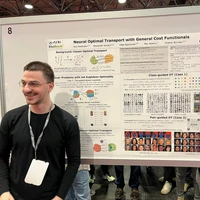
Neural Optimal Transport with General Cost Functionals
We introduce a novel neural network-based algorithm to compute optimal transport (OT) plans for general cost functionals. In contrast to common Euclidean costs, i.e., ell^1 or ell^2, such functionals provide more flexibility and allow using auxiliary information, such as class labels, to construct the required transport map. Existing methods for general costs are discrete and have limitations in practice, i.e. they do not provide an out-of-sample estimation. We address the challenge of designing a continuous OT approach for general costs that generalizes to new data points in high-dimensional spaces, such as images. Additionally, we provide the theoretical error analysis for our recovered transport plans. As an application, we construct a cost functional to map data distributions while preserving the class-wise structure.
Constraint-Free Structure Learning with Smooth Acyclic Orientations
The structure learning problem consists of fitting data generated by a Directed Acyclic Graph (DAG) to correctly reconstruct its arcs. In this context, differentiable approaches constrain or regularize the optimization problem using a continuous relaxation of the acyclicity property. The computational cost of evaluating graph acyclicity is cubic on the number of nodes and significantly affects scalability. In this paper we introduce COSMO, a constraint-free continuous optimization scheme for acyclic structure learning. At the core of our method, we define a differentiable approximation of an orientation matrix parameterized by a single priority vector. Differently from previous work, our parameterization fits a smooth orientation matrix and the resulting acyclic adjacency matrix without evaluating acyclicity at any step. Despite the absence of explicit constraints, we prove that COSMO always converges to an acyclic solution. In addition to being asymptotically faster, our empirical analysis highlights how COSMO performance on graph reconstruction compares favorably with competing structure learning methods.
Motion Planning by Learning the Solution Manifold in Trajectory Optimization
The objective function used in trajectory optimization is often non-convex and can have an infinite set of local optima. In such cases, there are diverse solutions to perform a given task. Although there are a few methods to find multiple solutions for motion planning, they are limited to generating a finite set of solutions. To address this issue, we presents an optimization method that learns an infinite set of solutions in trajectory optimization. In our framework, diverse solutions are obtained by learning latent representations of solutions. Our approach can be interpreted as training a deep generative model of collision-free trajectories for motion planning. The experimental results indicate that the trained model represents an infinite set of homotopic solutions for motion planning problems.
Trace is the New AutoDiff -- Unlocking Efficient Optimization of Computational Workflows
We study a class of optimization problems motivated by automating the design and update of AI systems like coding assistants, robots, and copilots. We propose an end-to-end optimization framework, Trace, which treats the computational workflow of an AI system as a graph akin to neural networks, based on a generalization of back-propagation. Optimization of computational workflows often involves rich feedback (e.g. console output or user's responses), heterogeneous parameters (e.g. prompts, hyper-parameters, codes), and intricate objectives (beyond maximizing a score). Moreover, its computation graph can change dynamically with the inputs and parameters. We frame a new mathematical setup of iterative optimization, Optimization with Trace Oracle (OPTO), to capture and abstract these properties so as to design optimizers that work across many domains. In OPTO, an optimizer receives an execution trace along with feedback on the computed output and updates parameters iteratively. Trace is the tool to implement OPTO in practice. Trace has a Python interface that efficiently converts a computational workflow into an OPTO instance using a PyTorch-like interface. Using Trace, we develop a general-purpose LLM-based optimizer called OptoPrime that can effectively solve OPTO problems. In empirical studies, we find that OptoPrime is capable of first-order numerical optimization, prompt optimization, hyper-parameter tuning, robot controller design, code debugging, etc., and is often competitive with specialized optimizers for each domain. We believe that Trace, OptoPrime and the OPTO framework will enable the next generation of interactive agents that automatically adapt using various kinds of feedback. Website: https://microsoft.github.io/Trace


Old Optimizer, New Norm: An Anthology
Deep learning optimizers are often motivated through a mix of convex and approximate second-order theory. We select three such methods -- Adam, Shampoo and Prodigy -- and argue that each method can instead be understood as a squarely first-order method without convexity assumptions. In fact, after switching off exponential moving averages, each method is equivalent to steepest descent under a particular norm. By generalizing this observation, we chart a new design space for training algorithms. Different operator norms should be assigned to different tensors based on the role that the tensor plays within the network. For example, while linear and embedding layers may have the same weight space of R^{mtimes n}, these layers play different roles and should be assigned different norms. We hope that this idea of carefully metrizing the neural architecture might lead to more stable, scalable and indeed faster training.
A General Framework for User-Guided Bayesian Optimization
The optimization of expensive-to-evaluate black-box functions is prevalent in various scientific disciplines. Bayesian optimization is an automatic, general and sample-efficient method to solve these problems with minimal knowledge of the underlying function dynamics. However, the ability of Bayesian optimization to incorporate prior knowledge or beliefs about the function at hand in order to accelerate the optimization is limited, which reduces its appeal for knowledgeable practitioners with tight budgets. To allow domain experts to customize the optimization routine, we propose ColaBO, the first Bayesian-principled framework for incorporating prior beliefs beyond the typical kernel structure, such as the likely location of the optimizer or the optimal value. The generality of ColaBO makes it applicable across different Monte Carlo acquisition functions and types of user beliefs. We empirically demonstrate ColaBO's ability to substantially accelerate optimization when the prior information is accurate, and to retain approximately default performance when it is misleading.
Optimal Stochastic Non-smooth Non-convex Optimization through Online-to-Non-convex Conversion
We present new algorithms for optimizing non-smooth, non-convex stochastic objectives based on a novel analysis technique. This improves the current best-known complexity for finding a (delta,epsilon)-stationary point from O(epsilon^{-4}delta^{-1}) stochastic gradient queries to O(epsilon^{-3}delta^{-1}), which we also show to be optimal. Our primary technique is a reduction from non-smooth non-convex optimization to online learning, after which our results follow from standard regret bounds in online learning. For deterministic and second-order smooth objectives, applying more advanced optimistic online learning techniques enables a new complexity of O(epsilon^{-1.5}delta^{-0.5}). Our techniques also recover all optimal or best-known results for finding epsilon stationary points of smooth or second-order smooth objectives in both stochastic and deterministic settings.

A Constructive, Type-Theoretic Approach to Regression via Global Optimisation
We examine the connections between deterministic, complete, and general global optimisation of continuous functions and a general concept of regression from the perspective of constructive type theory via the concept of 'searchability'. We see how the property of convergence of global optimisation is a straightforward consequence of searchability. The abstract setting allows us to generalise searchability and continuity to higher-order functions, so that we can formulate novel convergence criteria for regression, derived from the convergence of global optimisation. All the theory and the motivating examples are fully formalised in the proof assistant Agda.
Is Bang-Bang Control All You Need? Solving Continuous Control with Bernoulli Policies
Reinforcement learning (RL) for continuous control typically employs distributions whose support covers the entire action space. In this work, we investigate the colloquially known phenomenon that trained agents often prefer actions at the boundaries of that space. We draw theoretical connections to the emergence of bang-bang behavior in optimal control, and provide extensive empirical evaluation across a variety of recent RL algorithms. We replace the normal Gaussian by a Bernoulli distribution that solely considers the extremes along each action dimension - a bang-bang controller. Surprisingly, this achieves state-of-the-art performance on several continuous control benchmarks - in contrast to robotic hardware, where energy and maintenance cost affect controller choices. Since exploration, learning,and the final solution are entangled in RL, we provide additional imitation learning experiments to reduce the impact of exploration on our analysis. Finally, we show that our observations generalize to environments that aim to model real-world challenges and evaluate factors to mitigate the emergence of bang-bang solutions. Our findings emphasize challenges for benchmarking continuous control algorithms, particularly in light of potential real-world applications.
Competitive Gradient Optimization
We study the problem of convergence to a stationary point in zero-sum games. We propose competitive gradient optimization (CGO ), a gradient-based method that incorporates the interactions between the two players in zero-sum games for optimization updates. We provide continuous-time analysis of CGO and its convergence properties while showing that in the continuous limit, CGO predecessors degenerate to their gradient descent ascent (GDA) variants. We provide a rate of convergence to stationary points and further propose a generalized class of alpha-coherent function for which we provide convergence analysis. We show that for strictly alpha-coherent functions, our algorithm convergences to a saddle point. Moreover, we propose optimistic CGO (OCGO), an optimistic variant, for which we show convergence rate to saddle points in alpha-coherent class of functions.
Practical tradeoffs between memory, compute, and performance in learned optimizers
Optimization plays a costly and crucial role in developing machine learning systems. In learned optimizers, the few hyperparameters of commonly used hand-designed optimizers, e.g. Adam or SGD, are replaced with flexible parametric functions. The parameters of these functions are then optimized so that the resulting learned optimizer minimizes a target loss on a chosen class of models. Learned optimizers can both reduce the number of required training steps and improve the final test loss. However, they can be expensive to train, and once trained can be expensive to use due to computational and memory overhead for the optimizer itself. In this work, we identify and quantify the design features governing the memory, compute, and performance trade-offs for many learned and hand-designed optimizers. We further leverage our analysis to construct a learned optimizer that is both faster and more memory efficient than previous work. Our model and training code are open source.

The Optimiser Hidden in Plain Sight: Training with the Loss Landscape's Induced Metric
We present a class of novel optimisers for training neural networks that makes use of the Riemannian metric naturally induced when the loss landscape is embedded in higher-dimensional space. This is the same metric that underlies common visualisations of loss landscapes. By taking this geometric perspective literally and using the induced metric, we develop a new optimiser and compare it to existing methods, namely: SGD, Adam, AdamW, and Muon, across a range of tasks and architectures. Empirically, we conclude that this new class of optimisers is highly effective in low dimensional examples, and provides slight improvement over state-of-the-art methods for training neural networks. These new optimisers have theoretically desirable properties. In particular, the effective learning rate is automatically decreased in regions of high curvature acting as a smoothed out form of gradient clipping. Similarly, one variant of these optimisers can also be viewed as inducing an effective scheduled learning rate and decoupled weight decay is the natural choice from our geometric perspective. The basic method can be used to modify any existing preconditioning method. The new optimiser has a computational complexity comparable to that of Adam.
DeepArchitect: Automatically Designing and Training Deep Architectures
In deep learning, performance is strongly affected by the choice of architecture and hyperparameters. While there has been extensive work on automatic hyperparameter optimization for simple spaces, complex spaces such as the space of deep architectures remain largely unexplored. As a result, the choice of architecture is done manually by the human expert through a slow trial and error process guided mainly by intuition. In this paper we describe a framework for automatically designing and training deep models. We propose an extensible and modular language that allows the human expert to compactly represent complex search spaces over architectures and their hyperparameters. The resulting search spaces are tree-structured and therefore easy to traverse. Models can be automatically compiled to computational graphs once values for all hyperparameters have been chosen. We can leverage the structure of the search space to introduce different model search algorithms, such as random search, Monte Carlo tree search (MCTS), and sequential model-based optimization (SMBO). We present experiments comparing the different algorithms on CIFAR-10 and show that MCTS and SMBO outperform random search. In addition, these experiments show that our framework can be used effectively for model discovery, as it is possible to describe expressive search spaces and discover competitive models without much effort from the human expert. Code for our framework and experiments has been made publicly available.
Greed is Good: Exploration and Exploitation Trade-offs in Bayesian Optimisation
The performance of acquisition functions for Bayesian optimisation to locate the global optimum of continuous functions is investigated in terms of the Pareto front between exploration and exploitation. We show that Expected Improvement (EI) and the Upper Confidence Bound (UCB) always select solutions to be expensively evaluated on the Pareto front, but Probability of Improvement is not guaranteed to do so and Weighted Expected Improvement does so only for a restricted range of weights. We introduce two novel epsilon-greedy acquisition functions. Extensive empirical evaluation of these together with random search, purely exploratory, and purely exploitative search on 10 benchmark problems in 1 to 10 dimensions shows that epsilon-greedy algorithms are generally at least as effective as conventional acquisition functions (e.g., EI and UCB), particularly with a limited budget. In higher dimensions epsilon-greedy approaches are shown to have improved performance over conventional approaches. These results are borne out on a real world computational fluid dynamics optimisation problem and a robotics active learning problem. Our analysis and experiments suggest that the most effective strategy, particularly in higher dimensions, is to be mostly greedy, occasionally selecting a random exploratory solution.

Two Complementary Perspectives to Continual Learning: Ask Not Only What to Optimize, But Also How
Recent years have seen considerable progress in the continual training of deep neural networks, predominantly thanks to approaches that add replay or regularization terms to the loss function to approximate the joint loss over all tasks so far. However, we show that even with a perfect approximation to the joint loss, these approaches still suffer from temporary but substantial forgetting when starting to train on a new task. Motivated by this 'stability gap', we propose that continual learning strategies should focus not only on the optimization objective, but also on the way this objective is optimized. While there is some continual learning work that alters the optimization trajectory (e.g., using gradient projection techniques), this line of research is positioned as alternative to improving the optimization objective, while we argue it should be complementary. To evaluate the merits of our proposition, we plan to combine replay-approximated joint objectives with gradient projection-based optimization routines to test whether the addition of the latter provides benefits in terms of (1) alleviating the stability gap, (2) increasing the learning efficiency and (3) improving the final learning outcome.
Gradual Transition from Bellman Optimality Operator to Bellman Operator in Online Reinforcement Learning
For continuous action spaces, actor-critic methods are widely used in online reinforcement learning (RL). However, unlike RL algorithms for discrete actions, which generally model the optimal value function using the Bellman optimality operator, RL algorithms for continuous actions typically model Q-values for the current policy using the Bellman operator. These algorithms for continuous actions rely exclusively on policy updates for improvement, which often results in low sample efficiency. This study examines the effectiveness of incorporating the Bellman optimality operator into actor-critic frameworks. Experiments in a simple environment show that modeling optimal values accelerates learning but leads to overestimation bias. To address this, we propose an annealing approach that gradually transitions from the Bellman optimality operator to the Bellman operator, thereby accelerating learning while mitigating bias. Our method, combined with TD3 and SAC, significantly outperforms existing approaches across various locomotion and manipulation tasks, demonstrating improved performance and robustness to hyperparameters related to optimality. The code for this study is available at https://github.com/motokiomura/annealed-q-learning.
Tutorial on amortized optimization
Optimization is a ubiquitous modeling tool and is often deployed in settings which repeatedly solve similar instances of the same problem. Amortized optimization methods use learning to predict the solutions to problems in these settings, exploiting the shared structure between similar problem instances. These methods have been crucial in variational inference and reinforcement learning and are capable of solving optimization problems many orders of magnitudes times faster than traditional optimization methods that do not use amortization. This tutorial presents an introduction to the amortized optimization foundations behind these advancements and overviews their applications in variational inference, sparse coding, gradient-based meta-learning, control, reinforcement learning, convex optimization, optimal transport, and deep equilibrium networks. The source code for this tutorial is available at https://github.com/facebookresearch/amortized-optimization-tutorial.
Orchestrated Value Mapping for Reinforcement Learning
We present a general convergent class of reinforcement learning algorithms that is founded on two distinct principles: (1) mapping value estimates to a different space using arbitrary functions from a broad class, and (2) linearly decomposing the reward signal into multiple channels. The first principle enables incorporating specific properties into the value estimator that can enhance learning. The second principle, on the other hand, allows for the value function to be represented as a composition of multiple utility functions. This can be leveraged for various purposes, e.g. dealing with highly varying reward scales, incorporating a priori knowledge about the sources of reward, and ensemble learning. Combining the two principles yields a general blueprint for instantiating convergent algorithms by orchestrating diverse mapping functions over multiple reward channels. This blueprint generalizes and subsumes algorithms such as Q-Learning, Log Q-Learning, and Q-Decomposition. In addition, our convergence proof for this general class relaxes certain required assumptions in some of these algorithms. Based on our theory, we discuss several interesting configurations as special cases. Finally, to illustrate the potential of the design space that our theory opens up, we instantiate a particular algorithm and evaluate its performance on the Atari suite.

Accelerated Parameter-Free Stochastic Optimization
We propose a method that achieves near-optimal rates for smooth stochastic convex optimization and requires essentially no prior knowledge of problem parameters. This improves on prior work which requires knowing at least the initial distance to optimality d0. Our method, U-DoG, combines UniXGrad (Kavis et al., 2019) and DoG (Ivgi et al., 2023) with novel iterate stabilization techniques. It requires only loose bounds on d0 and the noise magnitude, provides high probability guarantees under sub-Gaussian noise, and is also near-optimal in the non-smooth case. Our experiments show consistent, strong performance on convex problems and mixed results on neural network training.

Measuring the Intrinsic Dimension of Objective Landscapes
Many recently trained neural networks employ large numbers of parameters to achieve good performance. One may intuitively use the number of parameters required as a rough gauge of the difficulty of a problem. But how accurate are such notions? How many parameters are really needed? In this paper we attempt to answer this question by training networks not in their native parameter space, but instead in a smaller, randomly oriented subspace. We slowly increase the dimension of this subspace, note at which dimension solutions first appear, and define this to be the intrinsic dimension of the objective landscape. The approach is simple to implement, computationally tractable, and produces several suggestive conclusions. Many problems have smaller intrinsic dimensions than one might suspect, and the intrinsic dimension for a given dataset varies little across a family of models with vastly different sizes. This latter result has the profound implication that once a parameter space is large enough to solve a problem, extra parameters serve directly to increase the dimensionality of the solution manifold. Intrinsic dimension allows some quantitative comparison of problem difficulty across supervised, reinforcement, and other types of learning where we conclude, for example, that solving the inverted pendulum problem is 100 times easier than classifying digits from MNIST, and playing Atari Pong from pixels is about as hard as classifying CIFAR-10. In addition to providing new cartography of the objective landscapes wandered by parameterized models, the method is a simple technique for constructively obtaining an upper bound on the minimum description length of a solution. A byproduct of this construction is a simple approach for compressing networks, in some cases by more than 100 times.
The Definitive Guide to Policy Gradients in Deep Reinforcement Learning: Theory, Algorithms and Implementations
In recent years, various powerful policy gradient algorithms have been proposed in deep reinforcement learning. While all these algorithms build on the Policy Gradient Theorem, the specific design choices differ significantly across algorithms. We provide a holistic overview of on-policy policy gradient algorithms to facilitate the understanding of both their theoretical foundations and their practical implementations. In this overview, we include a detailed proof of the continuous version of the Policy Gradient Theorem, convergence results and a comprehensive discussion of practical algorithms. We compare the most prominent algorithms on continuous control environments and provide insights on the benefits of regularization. All code is available at https://github.com/Matt00n/PolicyGradientsJax.
Reinforcement Learning with General Utilities: Simpler Variance Reduction and Large State-Action Space
We consider the reinforcement learning (RL) problem with general utilities which consists in maximizing a function of the state-action occupancy measure. Beyond the standard cumulative reward RL setting, this problem includes as particular cases constrained RL, pure exploration and learning from demonstrations among others. For this problem, we propose a simpler single-loop parameter-free normalized policy gradient algorithm. Implementing a recursive momentum variance reduction mechanism, our algorithm achieves mathcal{O}(epsilon^{-3}) and mathcal{O}(epsilon^{-2}) sample complexities for epsilon-first-order stationarity and epsilon-global optimality respectively, under adequate assumptions. We further address the setting of large finite state action spaces via linear function approximation of the occupancy measure and show a mathcal{O}(epsilon^{-4}) sample complexity for a simple policy gradient method with a linear regression subroutine.
OptMATH: A Scalable Bidirectional Data Synthesis Framework for Optimization Modeling
Despite the rapid development of large language models (LLMs), a fundamental challenge persists: the lack of high-quality optimization modeling datasets hampers LLMs' robust modeling of practical optimization problems from natural language descriptions (NL). This data scarcity also contributes to the generalization difficulties experienced by learning-based methods. To address these challenges, we propose a scalable framework for synthesizing a high-quality dataset, named OptMATH. Starting from curated seed data with mathematical formulations (MF), this framework automatically generates problem data (PD) with controllable complexity. Then, a back-translation step is employed to obtain NL. To verify the correspondence between the NL and the PD, a forward modeling step followed by rejection sampling is used. The accepted pairs constitute the training part of OptMATH. Then a collection of rejected pairs is identified and further filtered. This collection serves as a new benchmark for optimization modeling, containing difficult instances whose lengths are much longer than these of NL4OPT and MAMO. Through extensive experiments, we demonstrate that models of various sizes (0.5B-32B parameters) trained on OptMATH achieve superior results on multiple modeling benchmarks, thereby validating the effectiveness and scalability of our approach. Our dataset is publicly available at https://github.com/AuroraLHL/OptMATH.
Lion Secretly Solves Constrained Optimization: As Lyapunov Predicts
Lion (Evolved Sign Momentum), a new optimizer discovered through program search, has shown promising results in training large AI models. It performs comparably or favorably to AdamW but with greater memory efficiency. As we can expect from the results of a random search program, Lion incorporates elements from several existing algorithms, including signed momentum, decoupled weight decay, Polak, and Nesterov momentum, but does not fit into any existing category of theoretically grounded optimizers. Thus, even though Lion appears to perform well as a general-purpose optimizer for a wide range of tasks, its theoretical basis remains uncertain. This lack of theoretical clarity limits opportunities to further enhance and expand Lion's efficacy. This work aims to demystify Lion. Based on both continuous-time and discrete-time analysis, we demonstrate that Lion is a theoretically novel and principled approach for minimizing a general loss function f(x) while enforcing a bound constraint |x|_infty leq 1/lambda. Lion achieves this through the incorporation of decoupled weight decay, where lambda represents the weight decay coefficient. Our analysis is made possible by the development of a new Lyapunov function for the Lion updates. It applies to a broader family of Lion-kappa algorithms, where the sign(cdot) operator in Lion is replaced by the subgradient of a convex function kappa, leading to the solution of a general composite optimization problem of min_x f(x) + kappa^*(x). Our findings provide valuable insights into the dynamics of Lion and pave the way for further improvements and extensions of Lion-related algorithms.


Optimizing NOTEARS Objectives via Topological Swaps
Recently, an intriguing class of non-convex optimization problems has emerged in the context of learning directed acyclic graphs (DAGs). These problems involve minimizing a given loss or score function, subject to a non-convex continuous constraint that penalizes the presence of cycles in a graph. In this work, we delve into the optimization challenges associated with this class of non-convex programs. To address these challenges, we propose a bi-level algorithm that leverages the non-convex constraint in a novel way. The outer level of the algorithm optimizes over topological orders by iteratively swapping pairs of nodes within the topological order of a DAG. A key innovation of our approach is the development of an effective method for generating a set of candidate swapping pairs for each iteration. At the inner level, given a topological order, we utilize off-the-shelf solvers that can handle linear constraints. The key advantage of our proposed algorithm is that it is guaranteed to find a local minimum or a KKT point under weaker conditions compared to previous work and finds solutions with lower scores. Extensive experiments demonstrate that our method outperforms state-of-the-art approaches in terms of achieving a better score. Additionally, our method can also be used as a post-processing algorithm to significantly improve the score of other algorithms. Code implementing the proposed method is available at https://github.com/duntrain/topo.
Re-basin via implicit Sinkhorn differentiation
The recent emergence of new algorithms for permuting models into functionally equivalent regions of the solution space has shed some light on the complexity of error surfaces, and some promising properties like mode connectivity. However, finding the right permutation is challenging, and current optimization techniques are not differentiable, which makes it difficult to integrate into a gradient-based optimization, and often leads to sub-optimal solutions. In this paper, we propose a Sinkhorn re-basin network with the ability to obtain the transportation plan that better suits a given objective. Unlike the current state-of-art, our method is differentiable and, therefore, easy to adapt to any task within the deep learning domain. Furthermore, we show the advantage of our re-basin method by proposing a new cost function that allows performing incremental learning by exploiting the linear mode connectivity property. The benefit of our method is compared against similar approaches from the literature, under several conditions for both optimal transport finding and linear mode connectivity. The effectiveness of our continual learning method based on re-basin is also shown for several common benchmark datasets, providing experimental results that are competitive with state-of-art results from the literature.

Pareto Manifold Learning: Tackling multiple tasks via ensembles of single-task models
In Multi-Task Learning (MTL), tasks may compete and limit the performance achieved on each other, rather than guiding the optimization to a solution, superior to all its single-task trained counterparts. Since there is often not a unique solution optimal for all tasks, practitioners have to balance tradeoffs between tasks' performance, and resort to optimality in the Pareto sense. Most MTL methodologies either completely neglect this aspect, and instead of aiming at learning a Pareto Front, produce one solution predefined by their optimization schemes, or produce diverse but discrete solutions. Recent approaches parameterize the Pareto Front via neural networks, leading to complex mappings from tradeoff to objective space. In this paper, we conjecture that the Pareto Front admits a linear parameterization in parameter space, which leads us to propose Pareto Manifold Learning, an ensembling method in weight space. Our approach produces a continuous Pareto Front in a single training run, that allows to modulate the performance on each task during inference. Experiments on multi-task learning benchmarks, ranging from image classification to tabular datasets and scene understanding, show that Pareto Manifold Learning outperforms state-of-the-art single-point algorithms, while learning a better Pareto parameterization than multi-point baselines.

Towards Constituting Mathematical Structures for Learning to Optimize
Learning to Optimize (L2O), a technique that utilizes machine learning to learn an optimization algorithm automatically from data, has gained arising attention in recent years. A generic L2O approach parameterizes the iterative update rule and learns the update direction as a black-box network. While the generic approach is widely applicable, the learned model can overfit and may not generalize well to out-of-distribution test sets. In this paper, we derive the basic mathematical conditions that successful update rules commonly satisfy. Consequently, we propose a novel L2O model with a mathematics-inspired structure that is broadly applicable and generalized well to out-of-distribution problems. Numerical simulations validate our theoretical findings and demonstrate the superior empirical performance of the proposed L2O model.
Hyperparameter optimization with approximate gradient
Most models in machine learning contain at least one hyperparameter to control for model complexity. Choosing an appropriate set of hyperparameters is both crucial in terms of model accuracy and computationally challenging. In this work we propose an algorithm for the optimization of continuous hyperparameters using inexact gradient information. An advantage of this method is that hyperparameters can be updated before model parameters have fully converged. We also give sufficient conditions for the global convergence of this method, based on regularity conditions of the involved functions and summability of errors. Finally, we validate the empirical performance of this method on the estimation of regularization constants of L2-regularized logistic regression and kernel Ridge regression. Empirical benchmarks indicate that our approach is highly competitive with respect to state of the art methods.
"It Was a Magical Box": Understanding Practitioner Workflows and Needs in Optimization
Optimization underpins decision-making in domains from healthcare to logistics, yet for many practitioners it remains a "magical box": powerful but opaque, difficult to use, and reliant on specialized expertise. While prior work has extensively studied machine learning workflows, the everyday practices of optimization model developers (OMDs) have received little attention. We conducted semi-structured interviews with 15 OMDs across diverse domains to examine how optimization is done in practice. Our findings reveal a highly iterative workflow spanning six stages: problem elicitation, data processing, model development, implementation, validation, and deployment. Importantly, we find that optimization practice is not only about algorithms that deliver better decisions, but is equally shaped by data and dialogue - the ongoing communication with stakeholders that enables problem framing, trust, and adoption. We discuss opportunities for future tooling that foregrounds data and dialogue alongside decision-making, opening new directions for human-centered optimization.
An SDE for Modeling SAM: Theory and Insights
We study the SAM (Sharpness-Aware Minimization) optimizer which has recently attracted a lot of interest due to its increased performance over more classical variants of stochastic gradient descent. Our main contribution is the derivation of continuous-time models (in the form of SDEs) for SAM and two of its variants, both for the full-batch and mini-batch settings. We demonstrate that these SDEs are rigorous approximations of the real discrete-time algorithms (in a weak sense, scaling linearly with the learning rate). Using these models, we then offer an explanation of why SAM prefers flat minima over sharp ones~--~by showing that it minimizes an implicitly regularized loss with a Hessian-dependent noise structure. Finally, we prove that SAM is attracted to saddle points under some realistic conditions. Our theoretical results are supported by detailed experiments.
AlphaOPT: Formulating Optimization Programs with Self-Improving LLM Experience Library
Optimization modeling enables critical decisions across industries but remains difficult to automate: informal language must be mapped to precise mathematical formulations and executable solver code. Prior LLM approaches either rely on brittle prompting or costly retraining with limited generalization. We present AlphaOPT, a self-improving experience library that enables an LLM to learn from limited demonstrations (even answers alone, without gold-standard programs) and solver feedback - without annotated reasoning traces or parameter updates. AlphaOPT operates in a continual two-phase cycle: (i) a Library Learning phase that reflects on failed attempts, extracting solver-verified, structured insights as {taxonomy, condition, explanation, example}; and (ii) a Library Evolution phase that diagnoses retrieval misalignments and refines the applicability conditions of stored insights, improving transfer across tasks. This design (1) learns efficiently from limited demonstrations without curated rationales, (2) expands continually without costly retraining by updating the library rather than model weights, and (3) makes knowledge explicit and interpretable for human inspection and intervention. Experiments show that AlphaOPT steadily improves with more data (65% to 72% from 100 to 300 training items) and surpasses the strongest baseline by 7.7% on the out-of-distribution OptiBench dataset when trained only on answers. Code and data are available at: https://github.com/Minw913/AlphaOPT.
Let the Flows Tell: Solving Graph Combinatorial Optimization Problems with GFlowNets
Combinatorial optimization (CO) problems are often NP-hard and thus out of reach for exact algorithms, making them a tempting domain to apply machine learning methods. The highly structured constraints in these problems can hinder either optimization or sampling directly in the solution space. On the other hand, GFlowNets have recently emerged as a powerful machinery to efficiently sample from composite unnormalized densities sequentially and have the potential to amortize such solution-searching processes in CO, as well as generate diverse solution candidates. In this paper, we design Markov decision processes (MDPs) for different combinatorial problems and propose to train conditional GFlowNets to sample from the solution space. Efficient training techniques are also developed to benefit long-range credit assignment. Through extensive experiments on a variety of different CO tasks with synthetic and realistic data, we demonstrate that GFlowNet policies can efficiently find high-quality solutions.

Freeze-Thaw Bayesian Optimization
In this paper we develop a dynamic form of Bayesian optimization for machine learning models with the goal of rapidly finding good hyperparameter settings. Our method uses the partial information gained during the training of a machine learning model in order to decide whether to pause training and start a new model, or resume the training of a previously-considered model. We specifically tailor our method to machine learning problems by developing a novel positive-definite covariance kernel to capture a variety of training curves. Furthermore, we develop a Gaussian process prior that scales gracefully with additional temporal observations. Finally, we provide an information-theoretic framework to automate the decision process. Experiments on several common machine learning models show that our approach is extremely effective in practice.
Discovering and Exploiting Sparse Rewards in a Learned Behavior Space
Learning optimal policies in sparse rewards settings is difficult as the learning agent has little to no feedback on the quality of its actions. In these situations, a good strategy is to focus on exploration, hopefully leading to the discovery of a reward signal to improve on. A learning algorithm capable of dealing with this kind of settings has to be able to (1) explore possible agent behaviors and (2) exploit any possible discovered reward. Efficient exploration algorithms have been proposed that require to define a behavior space, that associates to an agent its resulting behavior in a space that is known to be worth exploring. The need to define this space is a limitation of these algorithms. In this work, we introduce STAX, an algorithm designed to learn a behavior space on-the-fly and to explore it while efficiently optimizing any reward discovered. It does so by separating the exploration and learning of the behavior space from the exploitation of the reward through an alternating two-steps process. In the first step, STAX builds a repertoire of diverse policies while learning a low-dimensional representation of the high-dimensional observations generated during the policies evaluation. In the exploitation step, emitters are used to optimize the performance of the discovered rewarding solutions. Experiments conducted on three different sparse reward environments show that STAX performs comparably to existing baselines while requiring much less prior information about the task as it autonomously builds the behavior space.

Tackling Prevalent Conditions in Unsupervised Combinatorial Optimization: Cardinality, Minimum, Covering, and More
Combinatorial optimization (CO) is naturally discrete, making machine learning based on differentiable optimization inapplicable. Karalias & Loukas (2020) adapted the probabilistic method to incorporate CO into differentiable optimization. Their work ignited the research on unsupervised learning for CO, composed of two main components: probabilistic objectives and derandomization. However, each component confronts unique challenges. First, deriving objectives under various conditions (e.g., cardinality constraints and minimum) is nontrivial. Second, the derandomization process is underexplored, and the existing derandomization methods are either random sampling or naive rounding. In this work, we aim to tackle prevalent (i.e., commonly involved) conditions in unsupervised CO. First, we concretize the targets for objective construction and derandomization with theoretical justification. Then, for various conditions commonly involved in different CO problems, we derive nontrivial objectives and derandomization to meet the targets. Finally, we apply the derivations to various CO problems. Via extensive experiments on synthetic and real-world graphs, we validate the correctness of our derivations and show our empirical superiority w.r.t. both optimization quality and speed.

Maximum Optimality Margin: A Unified Approach for Contextual Linear Programming and Inverse Linear Programming
In this paper, we study the predict-then-optimize problem where the output of a machine learning prediction task is used as the input of some downstream optimization problem, say, the objective coefficient vector of a linear program. The problem is also known as predictive analytics or contextual linear programming. The existing approaches largely suffer from either (i) optimization intractability (a non-convex objective function)/statistical inefficiency (a suboptimal generalization bound) or (ii) requiring strong condition(s) such as no constraint or loss calibration. We develop a new approach to the problem called maximum optimality margin which designs the machine learning loss function by the optimality condition of the downstream optimization. The max-margin formulation enjoys both computational efficiency and good theoretical properties for the learning procedure. More importantly, our new approach only needs the observations of the optimal solution in the training data rather than the objective function, which makes it a new and natural approach to the inverse linear programming problem under both contextual and context-free settings; we also analyze the proposed method under both offline and online settings, and demonstrate its performance using numerical experiments.
Target-based Surrogates for Stochastic Optimization
We consider minimizing functions for which it is expensive to compute the (possibly stochastic) gradient. Such functions are prevalent in reinforcement learning, imitation learning and adversarial training. Our target optimization framework uses the (expensive) gradient computation to construct surrogate functions in a target space (e.g. the logits output by a linear model for classification) that can be minimized efficiently. This allows for multiple parameter updates to the model, amortizing the cost of gradient computation. In the full-batch setting, we prove that our surrogate is a global upper-bound on the loss, and can be (locally) minimized using a black-box optimization algorithm. We prove that the resulting majorization-minimization algorithm ensures convergence to a stationary point of the loss. Next, we instantiate our framework in the stochastic setting and propose the SSO algorithm, which can be viewed as projected stochastic gradient descent in the target space. This connection enables us to prove theoretical guarantees for SSO when minimizing convex functions. Our framework allows the use of standard stochastic optimization algorithms to construct surrogates which can be minimized by any deterministic optimization method. To evaluate our framework, we consider a suite of supervised learning and imitation learning problems. Our experiments indicate the benefits of target optimization and the effectiveness of SSO.
Reinforcement learning with combinatorial actions for coupled restless bandits
Reinforcement learning (RL) has increasingly been applied to solve real-world planning problems, with progress in handling large state spaces and time horizons. However, a key bottleneck in many domains is that RL methods cannot accommodate large, combinatorially structured action spaces. In such settings, even representing the set of feasible actions at a single step may require a complex discrete optimization formulation. We leverage recent advances in embedding trained neural networks into optimization problems to propose SEQUOIA, an RL algorithm that directly optimizes for long-term reward over the feasible action space. Our approach embeds a Q-network into a mixed-integer program to select a combinatorial action in each timestep. Here, we focus on planning over restless bandits, a class of planning problems which capture many real-world examples of sequential decision making. We introduce coRMAB, a broader class of restless bandits with combinatorial actions that cannot be decoupled across the arms of the restless bandit, requiring direct solving over the joint, exponentially large action space. We empirically validate SEQUOIA on four novel restless bandit problems with combinatorial constraints: multiple interventions, path constraints, bipartite matching, and capacity constraints. Our approach significantly outperforms existing methods -- which cannot address sequential planning and combinatorial selection simultaneously -- by an average of 24.8\% on these difficult instances.
Understanding Optimization in Deep Learning with Central Flows
Traditional theories of optimization cannot describe the dynamics of optimization in deep learning, even in the simple setting of deterministic training. The challenge is that optimizers typically operate in a complex, oscillatory regime called the "edge of stability." In this paper, we develop theory that can describe the dynamics of optimization in this regime. Our key insight is that while the *exact* trajectory of an oscillatory optimizer may be challenging to analyze, the *time-averaged* (i.e. smoothed) trajectory is often much more tractable. To analyze an optimizer, we derive a differential equation called a "central flow" that characterizes this time-averaged trajectory. We empirically show that these central flows can predict long-term optimization trajectories for generic neural networks with a high degree of numerical accuracy. By interpreting these central flows, we are able to understand how gradient descent makes progress even as the loss sometimes goes up; how adaptive optimizers "adapt" to the local loss landscape; and how adaptive optimizers implicitly navigate towards regions where they can take larger steps. Our results suggest that central flows can be a valuable theoretical tool for reasoning about optimization in deep learning.
Relaxing the Additivity Constraints in Decentralized No-Regret High-Dimensional Bayesian Optimization
Bayesian Optimization (BO) is typically used to optimize an unknown function f that is noisy and costly to evaluate, by exploiting an acquisition function that must be maximized at each optimization step. Even if provably asymptotically optimal BO algorithms are efficient at optimizing low-dimensional functions, scaling them to high-dimensional spaces remains an open problem, often tackled by assuming an additive structure for f. By doing so, BO algorithms typically introduce additional restrictive assumptions on the additive structure that reduce their applicability domain. This paper contains two main contributions: (i) we relax the restrictive assumptions on the additive structure of f without weakening the maximization guarantees of the acquisition function, and (ii) we address the over-exploration problem for decentralized BO algorithms. To these ends, we propose DuMBO, an asymptotically optimal decentralized BO algorithm that achieves very competitive performance against state-of-the-art BO algorithms, especially when the additive structure of f comprises high-dimensional factors.
DARTS: Differentiable Architecture Search
This paper addresses the scalability challenge of architecture search by formulating the task in a differentiable manner. Unlike conventional approaches of applying evolution or reinforcement learning over a discrete and non-differentiable search space, our method is based on the continuous relaxation of the architecture representation, allowing efficient search of the architecture using gradient descent. Extensive experiments on CIFAR-10, ImageNet, Penn Treebank and WikiText-2 show that our algorithm excels in discovering high-performance convolutional architectures for image classification and recurrent architectures for language modeling, while being orders of magnitude faster than state-of-the-art non-differentiable techniques. Our implementation has been made publicly available to facilitate further research on efficient architecture search algorithms.
Optimistic Games for Combinatorial Bayesian Optimization with Application to Protein Design
Bayesian optimization (BO) is a powerful framework to optimize black-box expensive-to-evaluate functions via sequential interactions. In several important problems (e.g. drug discovery, circuit design, neural architecture search, etc.), though, such functions are defined over large combinatorial and unstructured spaces. This makes existing BO algorithms not feasible due to the intractable maximization of the acquisition function over these domains. To address this issue, we propose GameOpt, a novel game-theoretical approach to combinatorial BO. GameOpt establishes a cooperative game between the different optimization variables, and selects points that are game equilibria of an upper confidence bound acquisition function. These are stable configurations from which no variable has an incentive to deviate- analog to local optima in continuous domains. Crucially, this allows us to efficiently break down the complexity of the combinatorial domain into individual decision sets, making GameOpt scalable to large combinatorial spaces. We demonstrate the application of GameOpt to the challenging protein design problem and validate its performance on four real-world protein datasets. Each protein can take up to 20^{X} possible configurations, where X is the length of a protein, making standard BO methods infeasible. Instead, our approach iteratively selects informative protein configurations and very quickly discovers highly active protein variants compared to other baselines.

SWAT-NN: Simultaneous Weights and Architecture Training for Neural Networks in a Latent Space
Designing neural networks typically relies on manual trial and error or a neural architecture search (NAS) followed by weight training. The former is time-consuming and labor-intensive, while the latter often discretizes architecture search and weight optimization. In this paper, we propose a fundamentally different approach that simultaneously optimizes both the architecture and the weights of a neural network. Our framework first trains a universal multi-scale autoencoder that embeds both architectural and parametric information into a continuous latent space, where functionally similar neural networks are mapped closer together. Given a dataset, we then randomly initialize a point in the embedding space and update it via gradient descent to obtain the optimal neural network, jointly optimizing its structure and weights. The optimization process incorporates sparsity and compactness penalties to promote efficient models. Experiments on synthetic regression tasks demonstrate that our method effectively discovers sparse and compact neural networks with strong performance.
Hyperband: A Novel Bandit-Based Approach to Hyperparameter Optimization
Performance of machine learning algorithms depends critically on identifying a good set of hyperparameters. While recent approaches use Bayesian optimization to adaptively select configurations, we focus on speeding up random search through adaptive resource allocation and early-stopping. We formulate hyperparameter optimization as a pure-exploration non-stochastic infinite-armed bandit problem where a predefined resource like iterations, data samples, or features is allocated to randomly sampled configurations. We introduce a novel algorithm, Hyperband, for this framework and analyze its theoretical properties, providing several desirable guarantees. Furthermore, we compare Hyperband with popular Bayesian optimization methods on a suite of hyperparameter optimization problems. We observe that Hyperband can provide over an order-of-magnitude speedup over our competitor set on a variety of deep-learning and kernel-based learning problems.
The Importance of Directional Feedback for LLM-based Optimizers
We study the potential of using large language models (LLMs) as an interactive optimizer for solving maximization problems in a text space using natural language and numerical feedback. Inspired by the classical optimization literature, we classify the natural language feedback into directional and non-directional, where the former is a generalization of the first-order feedback to the natural language space. We find that LLMs are especially capable of optimization when they are provided with {directional feedback}. Based on this insight, we design a new LLM-based optimizer that synthesizes directional feedback from the historical optimization trace to achieve reliable improvement over iterations. Empirically, we show our LLM-based optimizer is more stable and efficient in solving optimization problems, from maximizing mathematical functions to optimizing prompts for writing poems, compared with existing techniques.

μLO: Compute-Efficient Meta-Generalization of Learned Optimizers
Learned optimizers (LOs) can significantly reduce the wall-clock training time of neural networks, substantially reducing training costs. However, they often suffer from poor meta-generalization, especially when training networks larger than those seen during meta-training. To address this, we use the recently proposed Maximal Update Parametrization (muP), which allows zero-shot generalization of optimizer hyperparameters from smaller to larger models. We extend muP theory to learned optimizers, treating the meta-training problem as finding the learned optimizer under muP. Our evaluation shows that LOs meta-trained with muP substantially improve meta-generalization as compared to LOs trained under standard parametrization (SP). Notably, when applied to large-width models, our best muLO, trained for 103 GPU-hours, matches or exceeds the performance of VeLO, the largest publicly available learned optimizer, meta-trained with 4000 TPU-months of compute. Moreover, muLOs demonstrate better generalization than their SP counterparts to deeper networks and to much longer training horizons (25 times longer) than those seen during meta-training.



Universal Neural Functionals
A challenging problem in many modern machine learning tasks is to process weight-space features, i.e., to transform or extract information from the weights and gradients of a neural network. Recent works have developed promising weight-space models that are equivariant to the permutation symmetries of simple feedforward networks. However, they are not applicable to general architectures, since the permutation symmetries of a weight space can be complicated by recurrence or residual connections. This work proposes an algorithm that automatically constructs permutation equivariant models, which we refer to as universal neural functionals (UNFs), for any weight space. Among other applications, we demonstrate how UNFs can be substituted into existing learned optimizer designs, and find promising improvements over prior methods when optimizing small image classifiers and language models. Our results suggest that learned optimizers can benefit from considering the (symmetry) structure of the weight space they optimize. We open-source our library for constructing UNFs at https://github.com/AllanYangZhou/universal_neural_functional.
GrASP: Gradient-Based Affordance Selection for Planning
Planning with a learned model is arguably a key component of intelligence. There are several challenges in realizing such a component in large-scale reinforcement learning (RL) problems. One such challenge is dealing effectively with continuous action spaces when using tree-search planning (e.g., it is not feasible to consider every action even at just the root node of the tree). In this paper we present a method for selecting affordances useful for planning -- for learning which small number of actions/options from a continuous space of actions/options to consider in the tree-expansion process during planning. We consider affordances that are goal-and-state-conditional mappings to actions/options as well as unconditional affordances that simply select actions/options available in all states. Our selection method is gradient based: we compute gradients through the planning procedure to update the parameters of the function that represents affordances. Our empirical work shows that it is feasible to learn to select both primitive-action and option affordances, and that simultaneously learning to select affordances and planning with a learned value-equivalent model can outperform model-free RL.
Multi-Objective GFlowNets
In many applications of machine learning, like drug discovery and material design, the goal is to generate candidates that simultaneously maximize a set of objectives. As these objectives are often conflicting, there is no single candidate that simultaneously maximizes all objectives, but rather a set of Pareto-optimal candidates where one objective cannot be improved without worsening another. Moreover, in practice, these objectives are often under-specified, making the diversity of candidates a key consideration. The existing multi-objective optimization methods focus predominantly on covering the Pareto front, failing to capture diversity in the space of candidates. Motivated by the success of GFlowNets for generation of diverse candidates in a single objective setting, in this paper we consider Multi-Objective GFlowNets (MOGFNs). MOGFNs consist of a novel Conditional GFlowNet which models a family of single-objective sub-problems derived by decomposing the multi-objective optimization problem. Our work is the first to empirically demonstrate conditional GFlowNets. Through a series of experiments on synthetic and benchmark tasks, we empirically demonstrate that MOGFNs outperform existing methods in terms of Hypervolume, R2-distance and candidate diversity. We also demonstrate the effectiveness of MOGFNs over existing methods in active learning settings. Finally, we supplement our empirical results with a careful analysis of each component of MOGFNs.


Bayesian Optimization for Selecting Efficient Machine Learning Models
The performance of many machine learning models depends on their hyper-parameter settings. Bayesian Optimization has become a successful tool for hyper-parameter optimization of machine learning algorithms, which aims to identify optimal hyper-parameters during an iterative sequential process. However, most of the Bayesian Optimization algorithms are designed to select models for effectiveness only and ignore the important issue of model training efficiency. Given that both model effectiveness and training time are important for real-world applications, models selected for effectiveness may not meet the strict training time requirements necessary to deploy in a production environment. In this work, we present a unified Bayesian Optimization framework for jointly optimizing models for both prediction effectiveness and training efficiency. We propose an objective that captures the tradeoff between these two metrics and demonstrate how we can jointly optimize them in a principled Bayesian Optimization framework. Experiments on model selection for recommendation tasks indicate models selected this way significantly improves model training efficiency while maintaining strong effectiveness as compared to state-of-the-art Bayesian Optimization algorithms.


OptiBench Meets ReSocratic: Measure and Improve LLMs for Optimization Modeling
Large language models (LLMs) have exhibited their problem-solving abilities in mathematical reasoning. Solving realistic optimization (OPT) problems in application scenarios requires advanced and applied mathematics ability. However, current OPT benchmarks that merely solve linear programming are far from complex realistic situations. In this work, we propose OptiBench, a benchmark for End-to-end optimization problem-solving with human-readable inputs and outputs. OptiBench contains rich optimization problems, including linear and nonlinear programming with or without tabular data, which can comprehensively evaluate LLMs' solving ability. In our benchmark, LLMs are required to call a code solver to provide precise numerical answers. Furthermore, to alleviate the data scarcity for optimization problems, and to bridge the gap between open-source LLMs on a small scale (e.g., Llama-3-8b) and closed-source LLMs (e.g., GPT-4), we further propose a data synthesis method namely ReSocratic. Unlike general data synthesis methods that proceed from questions to answers, \ReSocratic first incrementally synthesizes formatted optimization demonstration with mathematical formulations step by step and then back-translates the generated demonstrations into questions. Based on this, we synthesize the ReSocratic-29k dataset. We further conduct supervised fine-tuning with ReSocratic-29k on multiple open-source models. Experimental results show that ReSocratic-29k significantly improves the performance of open-source models.


The Best of N Worlds: Aligning Reinforcement Learning with Best-of-N Sampling via max@k Optimisation
The application of Reinforcement Learning with Verifiable Rewards (RLVR) to mathematical and coding domains has demonstrated significant improvements in the reasoning and problem-solving abilities of Large Language Models. Despite its success in single generation problem solving, the reinforcement learning fine-tuning process may harm the model's exploration ability, as reflected in decreased diversity of generations and a resulting degradation of performance during Best-of-N sampling for large N values. In this work, we focus on optimizing the max@k metric, a continuous generalization of pass@k. We derive an unbiased on-policy gradient estimate for direct optimization of this metric. Furthermore, we extend our derivations to the off-policy updates, a common element in modern RLVR algorithms, that allows better sample efficiency. Empirically, we show that our objective effectively optimizes max@k metric in off-policy scenarios, aligning the model with the Best-of-N inference strategy.

Fast hyperboloid decision tree algorithms
Hyperbolic geometry is gaining traction in machine learning for its effectiveness at capturing hierarchical structures in real-world data. Hyperbolic spaces, where neighborhoods grow exponentially, offer substantial advantages and consistently deliver state-of-the-art results across diverse applications. However, hyperbolic classifiers often grapple with computational challenges. Methods reliant on Riemannian optimization frequently exhibit sluggishness, stemming from the increased computational demands of operations on Riemannian manifolds. In response to these challenges, we present hyperDT, a novel extension of decision tree algorithms into hyperbolic space. Crucially, hyperDT eliminates the need for computationally intensive Riemannian optimization, numerically unstable exponential and logarithmic maps, or pairwise comparisons between points by leveraging inner products to adapt Euclidean decision tree algorithms to hyperbolic space. Our approach is conceptually straightforward and maintains constant-time decision complexity while mitigating the scalability issues inherent in high-dimensional Euclidean spaces. Building upon hyperDT we introduce hyperRF, a hyperbolic random forest model. Extensive benchmarking across diverse datasets underscores the superior performance of these models, providing a swift, precise, accurate, and user-friendly toolkit for hyperbolic data analysis.
Accelerated Stochastic Optimization Methods under Quasar-convexity
Non-convex optimization plays a key role in a growing number of machine learning applications. This motivates the identification of specialized structure that enables sharper theoretical analysis. One such identified structure is quasar-convexity, a non-convex generalization of convexity that subsumes convex functions. Existing algorithms for minimizing quasar-convex functions in the stochastic setting have either high complexity or slow convergence, which prompts us to derive a new class of stochastic methods for optimizing smooth quasar-convex functions. We demonstrate that our algorithms have fast convergence and outperform existing algorithms on several examples, including the classical problem of learning linear dynamical systems. We also present a unified analysis of our newly proposed algorithms and a previously studied deterministic algorithm.
COSMOS: A Hybrid Adaptive Optimizer for Memory-Efficient Training of LLMs
Large Language Models (LLMs) have demonstrated remarkable success across various domains, yet their optimization remains a significant challenge due to the complex and high-dimensional loss landscapes they inhabit. While adaptive optimizers such as AdamW are widely used, they suffer from critical limitations, including an inability to capture interdependencies between coordinates and high memory consumption. Subsequent research, exemplified by SOAP, attempts to better capture coordinate interdependence but incurs greater memory overhead, limiting scalability for massive LLMs. An alternative approach aims to reduce memory consumption through low-dimensional projection, but this leads to substantial approximation errors, resulting in less effective optimization (e.g., in terms of per-token efficiency). In this paper, we propose COSMOS, a novel hybrid optimizer that leverages the varying importance of eigensubspaces in the gradient matrix to achieve memory efficiency without compromising optimization performance. The design of COSMOS is motivated by our empirical insights and practical considerations. Specifically, COSMOS applies SOAP to the leading eigensubspace, which captures the primary optimization dynamics, and MUON to the remaining eigensubspace, which is less critical but computationally expensive to handle with SOAP. This hybrid strategy significantly reduces memory consumption while maintaining robust optimization performance, making it particularly suitable for massive LLMs. Numerical experiments on various datasets and transformer architectures are provided to demonstrate the effectiveness of COSMOS. Our code is available at https://github.com/lliu606/COSMOS.



Composing Global Optimizers to Reasoning Tasks via Algebraic Objects in Neural Nets
We prove rich algebraic structures of the solution space for 2-layer neural networks with quadratic activation and L_2 loss, trained on reasoning tasks in Abelian group (e.g., modular addition). Such a rich structure enables analytical construction of global optimal solutions from partial solutions that only satisfy part of the loss, despite its high nonlinearity. We coin the framework as CoGO (Composing Global Optimizers). Specifically, we show that the weight space over different numbers of hidden nodes of the 2-layer network is equipped with a semi-ring algebraic structure, and the loss function to be optimized consists of monomial potentials, which are ring homomorphism, allowing partial solutions to be composed into global ones by ring addition and multiplication. Our experiments show that around 95% of the solutions obtained by gradient descent match exactly our theoretical constructions. Although the global optimizers constructed only required a small number of hidden nodes, our analysis on gradient dynamics shows that over-parameterization asymptotically decouples training dynamics and is beneficial. We further show that training dynamics favors simpler solutions under weight decay, and thus high-order global optimizers such as perfect memorization are unfavorable.

Discovering General Reinforcement Learning Algorithms with Adversarial Environment Design
The past decade has seen vast progress in deep reinforcement learning (RL) on the back of algorithms manually designed by human researchers. Recently, it has been shown that it is possible to meta-learn update rules, with the hope of discovering algorithms that can perform well on a wide range of RL tasks. Despite impressive initial results from algorithms such as Learned Policy Gradient (LPG), there remains a generalization gap when these algorithms are applied to unseen environments. In this work, we examine how characteristics of the meta-training distribution impact the generalization performance of these algorithms. Motivated by this analysis and building on ideas from Unsupervised Environment Design (UED), we propose a novel approach for automatically generating curricula to maximize the regret of a meta-learned optimizer, in addition to a novel approximation of regret, which we name algorithmic regret (AR). The result is our method, General RL Optimizers Obtained Via Environment Design (GROOVE). In a series of experiments, we show that GROOVE achieves superior generalization to LPG, and evaluate AR against baseline metrics from UED, identifying it as a critical component of environment design in this setting. We believe this approach is a step towards the discovery of truly general RL algorithms, capable of solving a wide range of real-world environments.

Stochastic Policy Gradient Methods: Improved Sample Complexity for Fisher-non-degenerate Policies
Recently, the impressive empirical success of policy gradient (PG) methods has catalyzed the development of their theoretical foundations. Despite the huge efforts directed at the design of efficient stochastic PG-type algorithms, the understanding of their convergence to a globally optimal policy is still limited. In this work, we develop improved global convergence guarantees for a general class of Fisher-non-degenerate parameterized policies which allows to address the case of continuous state action spaces. First, we propose a Normalized Policy Gradient method with Implicit Gradient Transport (N-PG-IGT) and derive a mathcal{O}(varepsilon^{-2.5}) sample complexity of this method for finding a global varepsilon-optimal policy. Improving over the previously known mathcal{O}(varepsilon^{-3}) complexity, this algorithm does not require the use of importance sampling or second-order information and samples only one trajectory per iteration. Second, we further improve this complexity to mathcal{mathcal{O} }(varepsilon^{-2}) by considering a Hessian-Aided Recursive Policy Gradient ((N)-HARPG) algorithm enhanced with a correction based on a Hessian-vector product. Interestingly, both algorithms are (i) simple and easy to implement: single-loop, do not require large batches of trajectories and sample at most two trajectories per iteration; (ii) computationally and memory efficient: they do not require expensive subroutines at each iteration and can be implemented with memory linear in the dimension of parameters.
From Optimization Dynamics to Generalization Bounds via Łojasiewicz Gradient Inequality
Optimization and generalization are two essential aspects of statistical machine learning. In this paper, we propose a framework to connect optimization with generalization by analyzing the generalization error based on the optimization trajectory under the gradient flow algorithm. The key ingredient of this framework is the Uniform-LGI, a property that is generally satisfied when training machine learning models. Leveraging the Uniform-LGI, we first derive convergence rates for gradient flow algorithm, then we give generalization bounds for a large class of machine learning models. We further apply our framework to three distinct machine learning models: linear regression, kernel regression, and two-layer neural networks. Through our approach, we obtain generalization estimates that match or extend previous results.

Meta Optimal Transport
We study the use of amortized optimization to predict optimal transport (OT) maps from the input measures, which we call Meta OT. This helps repeatedly solve similar OT problems between different measures by leveraging the knowledge and information present from past problems to rapidly predict and solve new problems. Otherwise, standard methods ignore the knowledge of the past solutions and suboptimally re-solve each problem from scratch. We instantiate Meta OT models in discrete and continuous settings between grayscale images, spherical data, classification labels, and color palettes and use them to improve the computational time of standard OT solvers. Our source code is available at http://github.com/facebookresearch/meta-ot


Efficient Rate Optimal Regret for Adversarial Contextual MDPs Using Online Function Approximation
We present the OMG-CMDP! algorithm for regret minimization in adversarial Contextual MDPs. The algorithm operates under the minimal assumptions of realizable function class and access to online least squares and log loss regression oracles. Our algorithm is efficient (assuming efficient online regression oracles), simple and robust to approximation errors. It enjoys an O(H^{2.5} T|S||A| ( mathcal{R(O) + H log(delta^{-1}) )}) regret guarantee, with T being the number of episodes, S the state space, A the action space, H the horizon and R(O) = R(O_{sq}^F) + R(O_{log}^P) is the sum of the regression oracles' regret, used to approximate the context-dependent rewards and dynamics, respectively. To the best of our knowledge, our algorithm is the first efficient rate optimal regret minimization algorithm for adversarial CMDPs that operates under the minimal standard assumption of online function approximation.
Constrained Causal Bayesian Optimization
We propose constrained causal Bayesian optimization (cCBO), an approach for finding interventions in a known causal graph that optimize a target variable under some constraints. cCBO first reduces the search space by exploiting the graph structure and, if available, an observational dataset; and then solves the restricted optimization problem by modelling target and constraint quantities using Gaussian processes and by sequentially selecting interventions via a constrained expected improvement acquisition function. We propose different surrogate models that enable to integrate observational and interventional data while capturing correlation among effects with increasing levels of sophistication. We evaluate cCBO on artificial and real-world causal graphs showing successful trade off between fast convergence and percentage of feasible interventions.
ε-shotgun: ε-greedy Batch Bayesian Optimisation
Bayesian optimisation is a popular, surrogate model-based approach for optimising expensive black-box functions. Given a surrogate model, the next location to expensively evaluate is chosen via maximisation of a cheap-to-query acquisition function. We present an epsilon-greedy procedure for Bayesian optimisation in batch settings in which the black-box function can be evaluated multiple times in parallel. Our epsilon-shotgun algorithm leverages the model's prediction, uncertainty, and the approximated rate of change of the landscape to determine the spread of batch solutions to be distributed around a putative location. The initial target location is selected either in an exploitative fashion on the mean prediction, or -- with probability epsilon -- from elsewhere in the design space. This results in locations that are more densely sampled in regions where the function is changing rapidly and in locations predicted to be good (i.e close to predicted optima), with more scattered samples in regions where the function is flatter and/or of poorer quality. We empirically evaluate the epsilon-shotgun methods on a range of synthetic functions and two real-world problems, finding that they perform at least as well as state-of-the-art batch methods and in many cases exceed their performance.
Principled Approaches for Extending Neural Architectures to Function Spaces for Operator Learning
A wide range of scientific problems, such as those described by continuous-time dynamical systems and partial differential equations (PDEs), are naturally formulated on function spaces. While function spaces are typically infinite-dimensional, deep learning has predominantly advanced through applications in computer vision and natural language processing that focus on mappings between finite-dimensional spaces. Such fundamental disparities in the nature of the data have limited neural networks from achieving a comparable level of success in scientific applications as seen in other fields. Neural operators are a principled way to generalize neural networks to mappings between function spaces, offering a pathway to replicate deep learning's transformative impact on scientific problems. For instance, neural operators can learn solution operators for entire classes of PDEs, e.g., physical systems with different boundary conditions, coefficient functions, and geometries. A key factor in deep learning's success has been the careful engineering of neural architectures through extensive empirical testing. Translating these neural architectures into neural operators allows operator learning to enjoy these same empirical optimizations. However, prior neural operator architectures have often been introduced as standalone models, not directly derived as extensions of existing neural network architectures. In this paper, we identify and distill the key principles for constructing practical implementations of mappings between infinite-dimensional function spaces. Using these principles, we propose a recipe for converting several popular neural architectures into neural operators with minimal modifications. This paper aims to guide practitioners through this process and details the steps to make neural operators work in practice. Our code can be found at https://github.com/neuraloperator/NNs-to-NOs
WebPilot: A Versatile and Autonomous Multi-Agent System for Web Task Execution with Strategic Exploration
LLM-based autonomous agents often fail to execute complex web tasks that require dynamic interaction due to the inherent uncertainty and complexity of these environments. Existing LLM-based web agents typically rely on rigid, expert-designed policies specific to certain states and actions, which lack the flexibility and generalizability needed to adapt to unseen tasks. In contrast, humans excel by exploring unknowns, continuously adapting strategies, and resolving ambiguities through exploration. To emulate human-like adaptability, web agents need strategic exploration and complex decision-making. Monte Carlo Tree Search (MCTS) is well-suited for this, but classical MCTS struggles with vast action spaces, unpredictable state transitions, and incomplete information in web tasks. In light of this, we develop WebPilot, a multi-agent system with a dual optimization strategy that improves MCTS to better handle complex web environments. Specifically, the Global Optimization phase involves generating a high-level plan by breaking down tasks into manageable subtasks and continuously refining this plan, thereby focusing the search process and mitigating the challenges posed by vast action spaces in classical MCTS. Subsequently, the Local Optimization phase executes each subtask using a tailored MCTS designed for complex environments, effectively addressing uncertainties and managing incomplete information. Experimental results on WebArena and MiniWoB++ demonstrate the effectiveness of WebPilot. Notably, on WebArena, WebPilot achieves SOTA performance with GPT-4, achieving a 93% relative increase in success rate over the concurrent tree search-based method. WebPilot marks a significant advancement in general autonomous agent capabilities, paving the way for more advanced and reliable decision-making in practical environments.

Discovering Temporally-Aware Reinforcement Learning Algorithms
Recent advancements in meta-learning have enabled the automatic discovery of novel reinforcement learning algorithms parameterized by surrogate objective functions. To improve upon manually designed algorithms, the parameterization of this learned objective function must be expressive enough to represent novel principles of learning (instead of merely recovering already established ones) while still generalizing to a wide range of settings outside of its meta-training distribution. However, existing methods focus on discovering objective functions that, like many widely used objective functions in reinforcement learning, do not take into account the total number of steps allowed for training, or "training horizon". In contrast, humans use a plethora of different learning objectives across the course of acquiring a new ability. For instance, students may alter their studying techniques based on the proximity to exam deadlines and their self-assessed capabilities. This paper contends that ignoring the optimization time horizon significantly restricts the expressive potential of discovered learning algorithms. We propose a simple augmentation to two existing objective discovery approaches that allows the discovered algorithm to dynamically update its objective function throughout the agent's training procedure, resulting in expressive schedules and increased generalization across different training horizons. In the process, we find that commonly used meta-gradient approaches fail to discover such adaptive objective functions while evolution strategies discover highly dynamic learning rules. We demonstrate the effectiveness of our approach on a wide range of tasks and analyze the resulting learned algorithms, which we find effectively balance exploration and exploitation by modifying the structure of their learning rules throughout the agent's lifetime.

Actor-Critics Can Achieve Optimal Sample Efficiency
Actor-critic algorithms have become a cornerstone in reinforcement learning (RL), leveraging the strengths of both policy-based and value-based methods. Despite recent progress in understanding their statistical efficiency, no existing work has successfully learned an epsilon-optimal policy with a sample complexity of O(1/epsilon^2) trajectories with general function approximation when strategic exploration is necessary. We address this open problem by introducing a novel actor-critic algorithm that attains a sample-complexity of O(dH^5 log|A|/epsilon^2 + d H^4 log|F|/ epsilon^2) trajectories, and accompanying T regret when the Bellman eluder dimension d does not increase with T at more than a log T rate. Here, F is the critic function class, A is the action space, and H is the horizon in the finite horizon MDP setting. Our algorithm integrates optimism, off-policy critic estimation targeting the optimal Q-function, and rare-switching policy resets. We extend this to the setting of Hybrid RL, showing that initializing the critic with offline data yields sample efficiency gains compared to purely offline or online RL. Further, utilizing access to offline data, we provide a non-optimistic provably efficient actor-critic algorithm that only additionally requires N_{off} geq c_{off}^*dH^4/epsilon^2 in exchange for omitting optimism, where c_{off}^* is the single-policy concentrability coefficient and N_{off} is the number of offline samples. This addresses another open problem in the literature. We further provide numerical experiments to support our theoretical findings.
Towards Gradient Free and Projection Free Stochastic Optimization
This paper focuses on the problem of constrained stochastic optimization. A zeroth order Frank-Wolfe algorithm is proposed, which in addition to the projection-free nature of the vanilla Frank-Wolfe algorithm makes it gradient free. Under convexity and smoothness assumption, we show that the proposed algorithm converges to the optimal objective function at a rate Oleft(1/T^{1/3}right), where T denotes the iteration count. In particular, the primal sub-optimality gap is shown to have a dimension dependence of Oleft(d^{1/3}right), which is the best known dimension dependence among all zeroth order optimization algorithms with one directional derivative per iteration. For non-convex functions, we obtain the Frank-Wolfe gap to be Oleft(d^{1/3}T^{-1/4}right). Experiments on black-box optimization setups demonstrate the efficacy of the proposed algorithm.

Generalizable Heuristic Generation Through Large Language Models with Meta-Optimization
Heuristic design with large language models (LLMs) has emerged as a promising approach for tackling combinatorial optimization problems (COPs). However, existing approaches often rely on manually predefined evolutionary computation (EC) optimizers and single-task training schemes, which may constrain the exploration of diverse heuristic algorithms and hinder the generalization of the resulting heuristics. To address these issues, we propose Meta-Optimization of Heuristics (MoH), a novel framework that operates at the optimizer level, discovering effective optimizers through the principle of meta-learning. Specifically, MoH leverages LLMs to iteratively refine a meta-optimizer that autonomously constructs diverse optimizers through (self-)invocation, thereby eliminating the reliance on a predefined EC optimizer. These constructed optimizers subsequently evolve heuristics for downstream tasks, enabling broader heuristic exploration. Moreover, MoH employs a multi-task training scheme to promote its generalization capability. Experiments on classic COPs demonstrate that MoH constructs an effective and interpretable meta-optimizer, achieving state-of-the-art performance across various downstream tasks, particularly in cross-size settings.
Improving Pareto Set Learning for Expensive Multi-objective Optimization via Stein Variational Hypernetworks
Expensive multi-objective optimization problems (EMOPs) are common in real-world scenarios where evaluating objective functions is costly and involves extensive computations or physical experiments. Current Pareto set learning methods for such problems often rely on surrogate models like Gaussian processes to approximate the objective functions. These surrogate models can become fragmented, resulting in numerous small uncertain regions between explored solutions. When using acquisition functions such as the Lower Confidence Bound (LCB), these uncertain regions can turn into pseudo-local optima, complicating the search for globally optimal solutions. To address these challenges, we propose a novel approach called SVH-PSL, which integrates Stein Variational Gradient Descent (SVGD) with Hypernetworks for efficient Pareto set learning. Our method addresses the issues of fragmented surrogate models and pseudo-local optima by collectively moving particles in a manner that smooths out the solution space. The particles interact with each other through a kernel function, which helps maintain diversity and encourages the exploration of underexplored regions. This kernel-based interaction prevents particles from clustering around pseudo-local optima and promotes convergence towards globally optimal solutions. Our approach aims to establish robust relationships between trade-off reference vectors and their corresponding true Pareto solutions, overcoming the limitations of existing methods. Through extensive experiments across both synthetic and real-world MOO benchmarks, we demonstrate that SVH-PSL significantly improves the quality of the learned Pareto set, offering a promising solution for expensive multi-objective optimization problems.

FOSI: Hybrid First and Second Order Optimization
Popular machine learning approaches forgo second-order information due to the difficulty of computing curvature in high dimensions. We present FOSI, a novel meta-algorithm that improves the performance of any base first-order optimizer by efficiently incorporating second-order information during the optimization process. In each iteration, FOSI implicitly splits the function into two quadratic functions defined on orthogonal subspaces, then uses a second-order method to minimize the first, and the base optimizer to minimize the other. We formally analyze FOSI's convergence and the conditions under which it improves a base optimizer. Our empirical evaluation demonstrates that FOSI improves the convergence rate and optimization time of first-order methods such as Heavy-Ball and Adam, and outperforms second-order methods (K-FAC and L-BFGS).
Efficient Parametric Approximations of Neural Network Function Space Distance
It is often useful to compactly summarize important properties of model parameters and training data so that they can be used later without storing and/or iterating over the entire dataset. As a specific case, we consider estimating the Function Space Distance (FSD) over a training set, i.e. the average discrepancy between the outputs of two neural networks. We propose a Linearized Activation Function TRick (LAFTR) and derive an efficient approximation to FSD for ReLU neural networks. The key idea is to approximate the architecture as a linear network with stochastic gating. Despite requiring only one parameter per unit of the network, our approach outcompetes other parametric approximations with larger memory requirements. Applied to continual learning, our parametric approximation is competitive with state-of-the-art nonparametric approximations, which require storing many training examples. Furthermore, we show its efficacy in estimating influence functions accurately and detecting mislabeled examples without expensive iterations over the entire dataset.
Differentiable DAG Sampling
We propose a new differentiable probabilistic model over DAGs (DP-DAG). DP-DAG allows fast and differentiable DAG sampling suited to continuous optimization. To this end, DP-DAG samples a DAG by successively (1) sampling a linear ordering of the node and (2) sampling edges consistent with the sampled linear ordering. We further propose VI-DP-DAG, a new method for DAG learning from observational data which combines DP-DAG with variational inference. Hence,VI-DP-DAG approximates the posterior probability over DAG edges given the observed data. VI-DP-DAG is guaranteed to output a valid DAG at any time during training and does not require any complex augmented Lagrangian optimization scheme in contrast to existing differentiable DAG learning approaches. In our extensive experiments, we compare VI-DP-DAG to other differentiable DAG learning baselines on synthetic and real datasets. VI-DP-DAG significantly improves DAG structure and causal mechanism learning while training faster than competitors.
Unified Software Design Patterns for Simulated Annealing
Any optimization algorithm programming interface can be seen as a black-box function with additional free parameters. In this spirit, simulated annealing (SA) can be implemented in pseudo-code within the dimensions of a single slide with free parameters relating to the annealing schedule. Such an implementation, however, necessarily neglects much of the structure necessary to take advantage of advances in computing resources and algorithmic breakthroughs. Simulated annealing is often introduced in myriad disciplines, from discrete examples like the Traveling Salesman Problem (TSP) to molecular cluster potential energy exploration or even explorations of a protein's configurational space. Theoretical guarantees also demand a stricter structure in terms of statistical quantities, which cannot simply be left to the user. We will introduce several standard paradigms and demonstrate how these can be "lifted" into a unified framework using object-oriented programming in Python. We demonstrate how clean, interoperable, reproducible programming libraries can be used to access and rapidly iterate on variants of Simulated Annealing in a manner which can be extended to serve as a best practices blueprint or design pattern for a data-driven optimization library.

CO-Bench: Benchmarking Language Model Agents in Algorithm Search for Combinatorial Optimization
Although LLM-based agents have attracted significant attention in domains such as software engineering and machine learning research, their role in advancing combinatorial optimization (CO) remains relatively underexplored. This gap underscores the need for a deeper understanding of their potential in tackling structured, constraint-intensive problems-a pursuit currently limited by the absence of comprehensive benchmarks for systematic investigation. To address this, we introduce CO-Bench, a benchmark suite featuring 36 real-world CO problems drawn from a broad range of domains and complexity levels. CO-Bench includes structured problem formulations and curated data to support rigorous investigation of LLM agents. We evaluate multiple agent frameworks against established human-designed algorithms, revealing key strengths and limitations of current approaches and identifying promising directions for future research. CO-Bench is publicly available at https://github.com/sunnweiwei/CO-Bench.

Graph Reinforcement Learning for Network Control via Bi-Level Optimization
Optimization problems over dynamic networks have been extensively studied and widely used in the past decades to formulate numerous real-world problems. However, (1) traditional optimization-based approaches do not scale to large networks, and (2) the design of good heuristics or approximation algorithms often requires significant manual trial-and-error. In this work, we argue that data-driven strategies can automate this process and learn efficient algorithms without compromising optimality. To do so, we present network control problems through the lens of reinforcement learning and propose a graph network-based framework to handle a broad class of problems. Instead of naively computing actions over high-dimensional graph elements, e.g., edges, we propose a bi-level formulation where we (1) specify a desired next state via RL, and (2) solve a convex program to best achieve it, leading to drastically improved scalability and performance. We further highlight a collection of desirable features to system designers, investigate design decisions, and present experiments on real-world control problems showing the utility, scalability, and flexibility of our framework.

Fair Densities via Boosting the Sufficient Statistics of Exponential Families
We introduce a boosting algorithm to pre-process data for fairness. Starting from an initial fair but inaccurate distribution, our approach shifts towards better data fitting while still ensuring a minimal fairness guarantee. To do so, it learns the sufficient statistics of an exponential family with boosting-compliant convergence. Importantly, we are able to theoretically prove that the learned distribution will have a representation rate and statistical rate data fairness guarantee. Unlike recent optimization based pre-processing methods, our approach can be easily adapted for continuous domain features. Furthermore, when the weak learners are specified to be decision trees, the sufficient statistics of the learned distribution can be examined to provide clues on sources of (un)fairness. Empirical results are present to display the quality of result on real-world data.
The snake in the Brownian sphere
The Brownian sphere is a random metric space, homeomorphic to the two-dimensional sphere, which arises as the universal scaling limit of many types of random planar maps. The direct construction of the Brownian sphere is via a continuous analogue of the Cori--Vauquelin--Schaeffer (CVS) bijection. The CVS bijection maps labeled trees to planar maps, and the continuous version maps Aldous' continuum random tree with Brownian labels (the Brownian snake) to the Brownian sphere. In this work, we describe the inverse of the continuous CVS bijection, by constructing the Brownian snake as a measurable function of the Brownian sphere. Special care is needed to work with the orientation of the Brownian sphere.
Function-space Parameterization of Neural Networks for Sequential Learning
Sequential learning paradigms pose challenges for gradient-based deep learning due to difficulties incorporating new data and retaining prior knowledge. While Gaussian processes elegantly tackle these problems, they struggle with scalability and handling rich inputs, such as images. To address these issues, we introduce a technique that converts neural networks from weight space to function space, through a dual parameterization. Our parameterization offers: (i) a way to scale function-space methods to large data sets via sparsification, (ii) retention of prior knowledge when access to past data is limited, and (iii) a mechanism to incorporate new data without retraining. Our experiments demonstrate that we can retain knowledge in continual learning and incorporate new data efficiently. We further show its strengths in uncertainty quantification and guiding exploration in model-based RL. Further information and code is available on the project website.


Efficient Quantification of Time-Series Prediction Error: Optimal Selection Conformal Prediction
Uncertainty is almost ubiquitous in safety-critical autonomous systems due to dynamic environments and the integration of learning-based components. Quantifying this uncertainty--particularly for time-series predictions in multi-stage optimization--is essential for safe control and verification tasks. Conformal Prediction (CP) is a distribution-free uncertainty quantification tool with rigorous finite-sample guarantees, but its performance relies on the design of the nonconformity measure, which remains challenging for time-series data. Existing methods either overfit on small datasets, or are computationally intensive on long-time-horizon problems and/or large datasets. To overcome these issues, we propose a new parameterization of the score functions and formulate an optimization program to compute the associated parameters. The optimal parameters directly lead to norm-ball regions that constitute minimal-average-radius conformal sets. We then provide a reformulation of the underlying optimization program to enable faster computation. We provide theoretical proofs on both the validity and efficiency of predictors constructed based on the proposed approach. Numerical results on various case studies demonstrate that our method outperforms state-of-the-art methods in terms of efficiency, with much lower computational requirements.
Trust Region Policy Optimization
We describe an iterative procedure for optimizing policies, with guaranteed monotonic improvement. By making several approximations to the theoretically-justified procedure, we develop a practical algorithm, called Trust Region Policy Optimization (TRPO). This algorithm is similar to natural policy gradient methods and is effective for optimizing large nonlinear policies such as neural networks. Our experiments demonstrate its robust performance on a wide variety of tasks: learning simulated robotic swimming, hopping, and walking gaits; and playing Atari games using images of the screen as input. Despite its approximations that deviate from the theory, TRPO tends to give monotonic improvement, with little tuning of hyperparameters.
Neural Stochastic Dual Dynamic Programming
Stochastic dual dynamic programming (SDDP) is a state-of-the-art method for solving multi-stage stochastic optimization, widely used for modeling real-world process optimization tasks. Unfortunately, SDDP has a worst-case complexity that scales exponentially in the number of decision variables, which severely limits applicability to only low dimensional problems. To overcome this limitation, we extend SDDP by introducing a trainable neural model that learns to map problem instances to a piece-wise linear value function within intrinsic low-dimension space, which is architected specifically to interact with a base SDDP solver, so that can accelerate optimization performance on new instances. The proposed Neural Stochastic Dual Dynamic Programming (nu-SDDP) continually self-improves by solving successive problems. An empirical investigation demonstrates that nu-SDDP can significantly reduce problem solving cost without sacrificing solution quality over competitors such as SDDP and reinforcement learning algorithms, across a range of synthetic and real-world process optimization problems.
